The Big Mango Heist: Setting a Dangerous Precedent? #mangogate
 At Explore, we love a great guerrilla marketing idea as much as the next marketer, but ‘stealing’ Bowen’s Big Mango is not one of those great ideas.
The story so far: on Monday, news broke that Bowen’s Big Mango (all ten tonnes of it) had disappeared from its spot outside the Bowen Information Centre. Today, after the mango was discovered hidden in a paddock behind the information centre, fast food chicken chain Nando’s revealed that it was behind the stunt, with more news to come this Friday. Nando’s even posted a YouTube video showing how it pulled off the ‘heist’.
Why is it such a bad idea? Given that the stunt has generated massive amounts of both mainstream and social media coverage, and is likely to result in strong coverage for whatever Nando’s is preparing to launch on Friday, isn’t that a good thing? (By the way, we’re guessing they are launching a new mango chicken dish.)
Nope. It has set a dangerous precedent.
For a start, it was dependent on a third party, Bowen Tourism, lying to media: “I think it’ll definitely turn up, no doubt about that. We’re not sure what has happened but I’m sure we’ll get it back.” (see further “Seven-tonne Big Mango ‘stolen’ from Bowen”, The Age, 24 February 2014). I think it’s bad enough when a company and/or its agency lies about its own stunt (and we’ve seen that before), but involving other parties? That’s taking it too far, and compromising not just the integrity of Nando’s and its agency, but also any other parties ‘in’ on the stunt.
Second, it’s setting a dangerous precedent that others might follow. After all, on the face of it, the disappearance of the big mango is to all intents and purposes a crime. Now, I’m sure that Nando’s and its agency covered all the contingencies to ensure that they had permission to do what they did, but until the truth was uncovered today, they had let the general public believe that a theft had been committed. What’s the bet that we will now have a whole bunch of copycat stunts, some of which might not be as carefully planned as this one?
Finally, given the blaze of publicity generated over the past 24 hours, what’s the likelihood that whatever it is that Nando’s launches on Friday will be largely ignored by media? Pretty high, I’d say.
I wonder if the original plan was to try and keep the big mango hidden until a big reveal on Friday morning? I guess now we’ll never know …
(Pictured above: “The Big Mango, Bowen, Queensland.”, Amos T Fairchild, available under a Creative Commons Attribution-Share Alike 2.5 Generic (CC BY-SA 2.5) licence.)
Silicon Valley, Pharma Ads and Convoy Advertising
 Despite almost 20 years working in the IT industry, I made my first visit to Silicon Valley last week for a series of meetings both in the Valley and in Reno, Nevada. Up until recently, most of my roles have been focussed on either the ANZ or Asia-Pacific markets, so the opportunities to travel to the US have always been limited.
There were three things that struck me during my stay in the US – the prominence of the IT industry across all forms of media; why it’s a good thing that we don’t have direct-to-consumer pharma advertising here; and a glimpse of a form of marketing I’ve never seen before: ‘convoy advertising’.
Thinking about the prominence of IT in the US, in Australia we probably don’t appreciate just how important IT businesses are to the US economy. Silicon Valley itself is like an industrial estate on a massive scale, where the best way to navigate is by using the IT logos on buildings to get your bearings. Driving around San Jose, Santa Clara and Sunnyvale, you get a sense of just how big this industry is by the size of the office complexes and the familiarity of the IT brands attached to them. Also, most of the professional sporting teams have IT companies as major sponsors; airports and television are full of IT advertising; and a significant proportion of Californian mainstream news media is devoted to reporting on the IT industry.
The second thing that stood out as different was pharmaceutical product advertising on US television. This ‘direct-to-consumer advertising’ for pharmaceuticals has long been banned in Australia and, according to Wikipedia, is currently only permitted in NZ and the US. To be honest, I can’t understand why pharma companies would want to advertise on television. It’s very hard to downplay the possible harmful side effects of a drug in the small print when you have to include it in the voiceover content of the ad – and it seems that you can’t whisper those side effects, or speak them very quickly! Most of the ads would put me off ever using that drug, despite its benefits. You can see some good examples of these ads, compiled in mid-2013, on YouTube.
Finally, on my trip from Reno back to San Francisco, I passed a marketing execution I hadn’t seen before. Searching on the web, I couldn’t find any other examples of it, so I wonder if it’s something completely new. If it is, I’m coining the term ‘convoy advertising’.
 I passed a convoy of six or seven trucks travelling well below the speed limit, all identically kitted out in the branding of the supermarket chain Raley’s, promoting Raley’s reward card, Something Extra. It seemed to be a very effective way to promote a new product or service, especially when the trucks were probably transporting goods at the same time. Over here, I’ve always liked transport company Linfox’s ‘You are passing another Fox’ message on the back of all its trucks, but I’ve never seen this form of convoy advertising before.
I can see some really great applications for this form of promotion in Australia – especially on the Sydney to Melbourne route!
Power with the People
 Two contrasting Australian books offered for sale on Amazon.com – both debut efforts published in 2013 – are a great example of how the Internet has transferred power from institutions to individuals, and the ramifications that has on the decisions you make to market your product. (Well, perhaps ‘power’ is too strong a term – ‘voicepower’ is probably better.)
The first, The Conservative Revolution from ultra-conservative Australian Federal Senator Cory Bernardi, and published Connor Court Publishing Pty Ltd, is a political tract espousing Bernardi’s right-wing views. The second is the self-published teen novel Invisible by Cecily Anne Paterson, a first-time author from the rural village of Kangaroo Valley.
Despite Bernardi’s public profile, the political machine of which he is part, and the marketing support of his publisher, Bernardi’s printed work is languishing at #150,454 in Books with a rating of 1.5 stars out of 5 from 257 reviewers, while Paterson’s book is 50,000 places ahead of Bernardi with 4.5 stars from 451 reviewers – and #2 free book in Kindle’s Teen & Young Adult Contemporary Romance eBooks category.
While the star ratings are quite telling, it’s the reviewers’ comments that really show voicepower at work. Bernardi has generated a lot of controversy in Australia, especially with his stance on gay marriage, abortion and environmentalism (see for example, “The real danger in Cory Bernardi’s comments“), and Bernardi’s Amazon listing has given opponents a great opportunity to respond, with a series of savage and at times comical reviews of his book – for example, the most popular review ‘Poor value, and very rough on the nether regions‘. On the other hand, Paterson’s reviewers have largely been supportive.
In hindsight, I wonder if Bernardi is regretting his decision to sell through Amazon, given the vitriol generated in the reviews. For a start, as a consumer it seems odd to me to buy an Australian book from an Australian publisher via a US bookseller. And it’s an odd choice to go with Amazon and not offer an ebook version, as is the case with the Bernardi book. Paterson, however, has everything to gain. She is reaching a worldwide audience with a book that resonates with teenage girls everywhere – despite the novel being self-published – and, by offering an ebook version for free, she is generating word of mouth and referral exposure that will give the book and any future novels she writes greater traction.
(Pictured above: “26 November 2013 Kiev (Student) Protests 01”, Oxlaey.com, available under a Creative Commons Attribution 2.0 Generic (CC BY 2.0) licence.)
Creating a Great Case Study
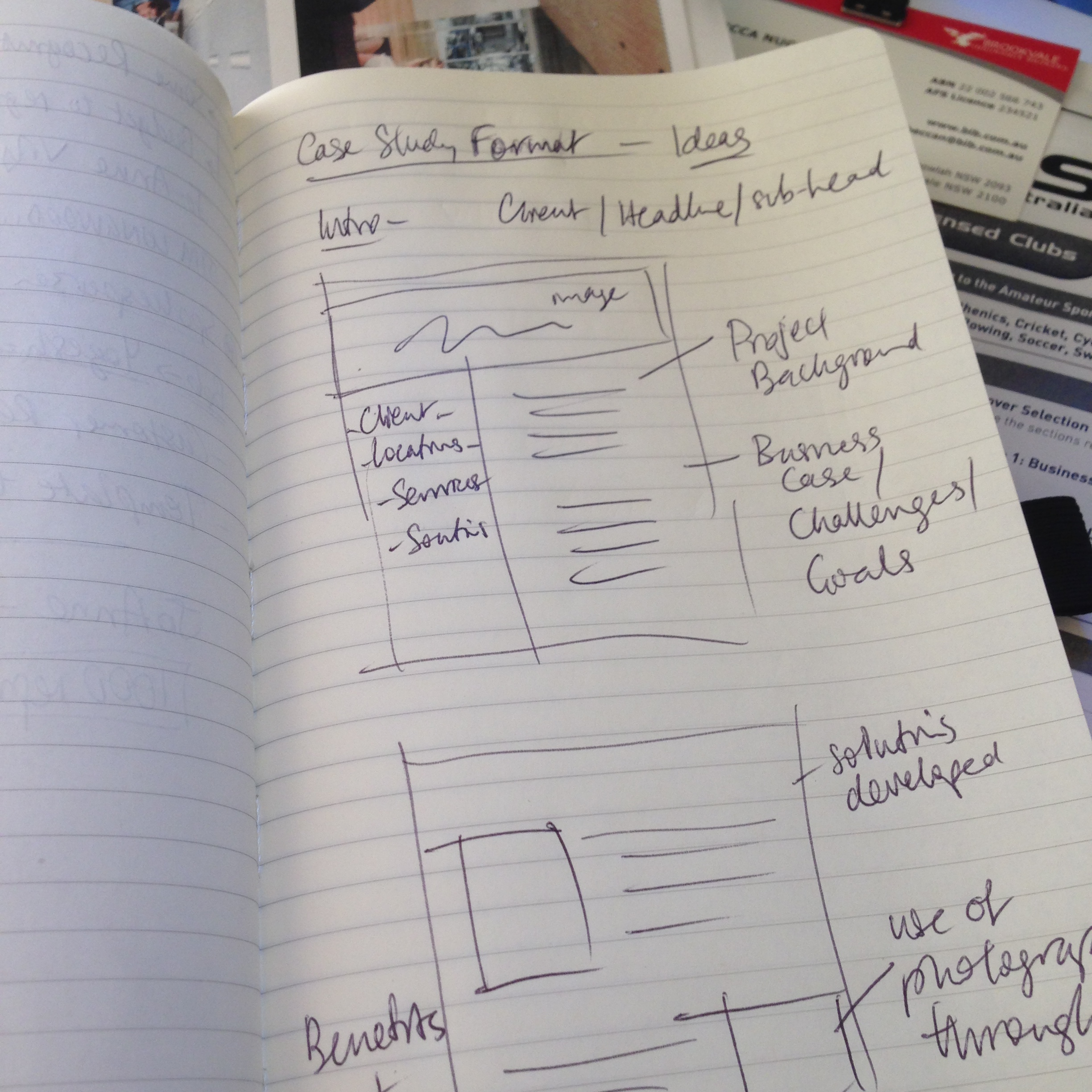 Back in June, I wrote about the power of a case study as one of the best marketing resources you can have for your business. Here at Explore creating case studies is one of our strengths – but up until last week, we had always worked within a client’s pre-existing case study style and format.
However, for the first time last week we were able to create a case study style and template from scratch – for a client that was just embarking on its first case study program.
As it turns out, we made a fundamental mistake.
Although we had a good understanding of the client’s business, and its solutions and services, and created what we thought was a great case study format, we had never spoken to one of its customers. So when we created the style and template for the case study, we didn’t factor in the unique nature of the customer’s reaction to the services and solutions provided by our client and the impact that those products and services had on its business – or the story we were told during the interview.
The most important aspect of a case study is to tell the customer’s story – and that needs to be factored into the case study style. While our plan was to structure the initial case study format around the services and solutions the client provided in the project, that’s not the way the customer sees things – and it’s not the way the case study’s audience (and the client’s prospective customers) will want to read it.
As a result, we pretty much threw out the previously agreed-to case study format, and created a new style on the basis of that first customer interview – which received a very positive response from our client.
So, if there is one thing to take away from the experience of creating a new case study program for a client, only go as far as preparing a “sketched out” format and then allow that evolve once you have talked to the customer.
Phones, Smartphones, Tablets and Dodgy Segues/Segways
 While the majority of the stories I mention in these posts will have a technology flavour, some are not always pro tech!
Mem Fox, one of Australia’s iconic children’s authors, was in the press recently warning about the dangers of kids being left to amuse themselves on smartphones and tablets, “saying an increasing reliance on technology to teach children how to read could inhibit their empathy and social skills.”
The following day I read an opinion piece on LinkedIn to the same effect from RedBalloon founder Naomi Simson: “Electronic ‘Baby Sitters’ Turning Brains to Mush”. I wrote about this a year ago, after having dinner with my then 14-year-old son in Sydney: “as I looked around the room, I noticed a pretty astounding thing. Apart from our table, every single child in the restaurant – and I mean every single child – was playing on some smartphone, tablet or games device.”
I love technology, but it has to know its place, just like everything else in society. And sometimes, tablets and smartphones are ideal for children’s development:
“Today’s multitouch technology has given researchers the ability to develop low-cost applications with the potential to engage suffers of autism, cerebral palsy and other developmental disabilities much faster and in some cases more effectively than the traditional methods of treatment.” (Kotaku, “Tablet Games Trump Traditional Therapy In Treating Autism And Cerebral Palsy”)
Speaking of smartphones and tablets (first segue!), an Australian company has launched a Kickstarter project for vtalk, “a desk phone as good looking and as easy to use as a smartphone.” I love the concept, and I also think the crowdfunding approach is right on the money, particularly with the $300 offer to developers:
“Get our developer edition vtalk phone, with complete documentation to get started on building great apps. You also get a sticker pack, t-shirt and credit on our backers page at thevtalkphone.com”
More than just the start-up funding, what’s just as critical for the long-term success of the product will be the developer and application ecosystem that is built up around the device. As at writing, the project had only reached AU$13,500 of its $250,000 goal, so hopefully enough people get behind it.
That said, I’m not sure that a single-purpose device like this will have widespread appeal. Earlier this year I wrote about Holiday by MooresCloud, which has a similar concept of building a developer ecosystem around its product, but I also mentioned some work that Explore Communications had done with ShoreTel’s Dock, which I think has the potential to be the shortcut to success. Why build from scratch, when you can adopt and use a dominant and widely used technology? In this case, ShoreTel, an IP telephony vendor, has built a physical docking device which acts as a deskphone when it is coupled with an iPad or iPhone. The company has developed an app and backend infrastructure so that users can use their iPads and iPhones as their deskphone, complete with all the functionality that they would get with a dedicated unified communications (UC) device. Clever, although time will tell if it is a successful strategy.
Last week (segue two), news also came through from two of ShoreTel’s competitors in the UC space – Mitel and Aastra agreeing to merge. The two companies are very complementary in terms of geographical strength and channel partnerships, but each has a very competitive product set, so it will be interesting how they go integrating their products and technologies. I’m not sure that the strategy will work – if you don’t end up offering the end user a greater product as a result of coming together, then why merge? At the end of the day, it’s the buyers who will decide the company’s future, and if they don’t see any benefit, they will go elsewhere.
Buyers really do decide a company’s future (segue three), and I read with interest “Hasntpaidyet.com: Debt dodgers named, shamed by traders”. It’s a clever idea: a website that effectively shames businesses into paying long-overdue invoices. “In less than a month, HasntPaidYet.com has helped settle about 200 small business debts involving sums of between $40 and $2500.” As a small business, Explore Communications has felt the pain of unpaid invoices, so it’s a very tempting website to use! Lately, we have experienced what I believe are unethical business practices, and it’s really disheartening to see that in an industry that is largely built on relationships and trust. Sometimes, it’s just easier to walk away.
Unethical business practices are my final segue, with news last week that Freelancer.com had a successful initial public offering (IPO). “For a brief moment on Friday, a small company that did not exist four years ago and will barely turn a profit was worth more than a $1 billion.” (The Age, “Freelancer.com in $700 million sharemarket launch”)
There was a voice of reason about this, and a funny one at that, the week before in the SMH: “Investors ignore floating ghosts”:
“Those who remember the first boom at the turn of the century – an era inhabited by SpongeBob Squarepants, the Y2K bug and a cigar-wielding Bill Clinton – will recall that pets.com was an online pet supply store boasting excellent marketing but an unfortunate habit of losing money every time a customer bought a bag of kitty litter.”
I’ve had plenty to say about Freelancer.com in the past, most recently when there was a rumour that the company was considering an acquisition offer from Recruit Co. (interesting timing, given the subsequent IPO). I’ll say it again – promoting article spinning jobs is highly unethical.
Apologies for all the dodgy segues, but it does remind me to mention Segway Tours South Coast – my son was due to go on a tour last week, but wet weather intervened. Does anyone else remember the excitement that had been whipped up around the product before it was launched? Now, it seems largely a novelty: Segway Polo, anyone?
(Pictured above: “Segway polo”, Braden Kowitz, available under a Creative Commons Attribution-ShareAlike 2.0 Generic (CC BY-SA 2.0) licence.)
Cloud, Smartphones, Apps and Printed Houses
This is the first of a regular weekly post, attempting to draw together, link and comment on news over the past seven days.
 One of the more startling statistics I read last week was a prediction in a press release from IT research company Gartner that “cloud computing will become the bulk of new IT spend by 2016”.
“The use of cloud computing is growing, and by 2016 this growth will increase to become the bulk of new IT spend, according to Gartner. 2016 will be a defining year for cloud as private cloud begins to give way to hybrid cloud, and nearly half of large enterprises will have hybrid cloud deployments by the end of 2017.”
There’s also been news recently about IBM and Amazon fighting it out over a $600m cloud computing contract with the CIA. By the way, IBM lost. And Gartner also came out with a figure of US$2.1bn for the cloud security market this year alone – yes, just cloud security.
Generally speaking, the community has grown to accept cloud – at a personal level, we get it and can easily see why it makes sense. Most computer users today are probably using at least one cloud-based service – and may not even be aware that they are doing so.
Cloud is not that different to other utility services that we take for granted in the First World – water, electricity, phone, Internet – it’s not really replacing something that we could do better ourselves, or at least it’s not having a negative impact on us in the physical sense. When technology advancement is seen to be having more of a negative influence on our lives than a positive one, then you would have to question its long-term viability.
Unlike cloud, there are some areas of technological advancement that are causing major community disquiet. It is easy to see how Pixar could take this concern to the nth degree and imagine the post-mass consumerist world in WALL-E and the human occupants of the spaceship Axiom (two of whom are pictured above), who have become virtually helpless after living for centuries with machines and computers doing everything for them.
One area of concern is smartphones. I wrote about it in happychild.com.au last year (Do Your Children Play on Smartphones in Restaurants?) and a Perth girls’ school was recently featured on ABC Radio because it had banned mobile phone use during breaks. This from Penrhos College’s principal Meg Melville:
“The problem we found was that the girls were sitting around at recess and lunch, and rather than talking with each other they were actually texting on their phones. And we felt that that’s really not the way we wanted their development to go. And we wanted to really instil the art of a good conversation as part of their social skills.”
ZDNet’s Jason Perlow also wrote a really good opinion piece on the subject: Why Generation Y needs a smartphone intervention – and he’s not even a parent!
As an extension of the smartphone issue, there has also been a lot of debate around the danger of screen time and apps on young children’s mental development. News.com.au published an article last week, Child education expert Professor Carla Rinaldi warns apps can kill creativity, in which Professor Rinaldi was quoted as saying that
“children were relying too much on technological “apps” instead of their own ingenuity and imagination.”
Another area of community concern is The Printer that Can Print a 2,500 Square Foot House in 20 Hours, although you have to read the comments below the story to get a sense for it. A lot of people are apprehensive about the future of trades and the building industry if this technique becomes prevalent. That said, it’s an incredible technological advance – imagine being able to automate the construction of a house! It’s a report on technology developed by the University of Southern California’s School of Engineering, called Contour Crafting:
“Contour Crafting technology has great potential for automating the construction of whole structures as well as sub-components. Using this process, a single house or a colony of houses, each with possibly a different design, may be automatically constructed in a single run, embedded in each house all the conduits for electrical, plumbing and air-conditioning.”
Maybe we aren’t that far from the world created for us in WALL-E, especially when Contour Crafting talks about future applications for the technology:
“Our research also addresses the application of Contour Crafting in building habitats on other planets. Contour Crafting will most probably be one of the very few feasible approaches for building structures on other planets, such as the Moon and Mars, which are being targeted for human colonization before the end of the new century.”
Don’t Oversell the Promise
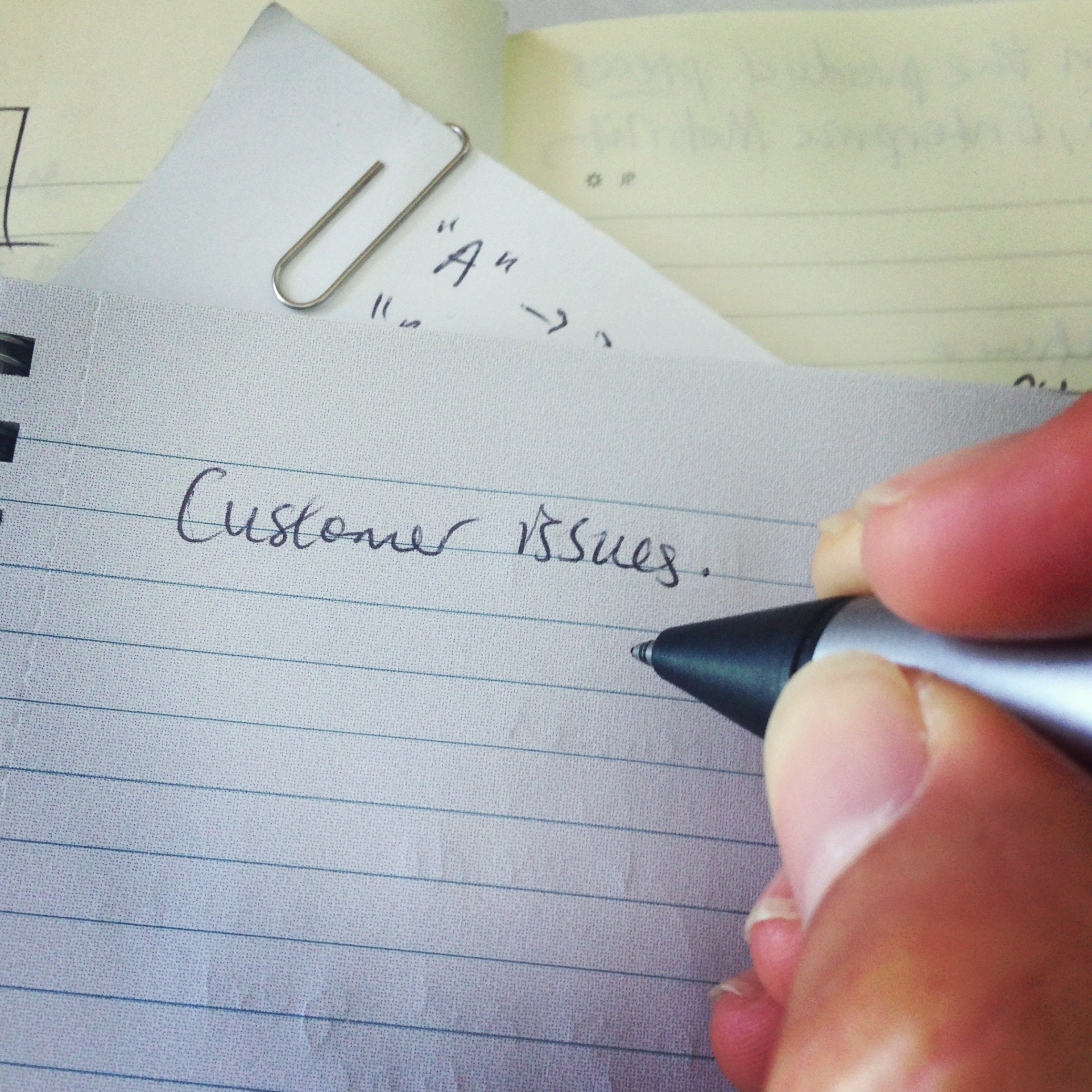 I don’t normally do product reviews on this site, but I felt compelled to do one when expectation failed to live up to marketing’s promise.
First, I should say that the product itself is actually OK; however, the failure is a great example as to why your product’s marketing messages need to be a close approximation of reality.
So what’s the product? It’s the online transcription service TranscribeMe – currently in beta (a key point, which I’ll cover later).
As a marketing communications professional, one of the banes of my existence is transcribing interviews or writing up my meeting notes. At a basic level, anything that can take away the pain of transcription simply and cost-effectively is worth a try – so when I read that TranscribeMe had teamed up with Evernote and Livescribe, having just completed an hour-long interview, I jumped at the opportunity.
I’ve been a Livescribe convert for a few years now – I love the connection between my (mostly cryptic) notes and the original audio recording, but the missing link to complete the chain has long been an automated transcription service.
The TranscribeMe announcement promised an automated process linking up the Livescribe recording via Evernote to TranscribeMe, with the added advantage that Livescribe users would receive the first 5 minutes of audio free. The service promised a 98 percent accuracy, and the ability to take both Pencast PDF and straight .m4a audio files from Livescribe. Great , I thought, I can live with that accuracy rate and I’m sure that’s improved by the transcribers having access to the original Livescribe notes if they need to confirm any words or terminology.
So I registered on the TranscribeMe site and connected Evernote with my TranscribeMe account, moved my Pencast PDF file across to Evernote, tagged it with “TranscribeMe”, as per instructions, then waited for my transcription to come back. After a few days nothing, and no sign of the file appearing up on the “My Recordings” section of the TranscribeMe website. I contacted the company via the online help form and was sent a “Ticket Received” email in response.
A few days later, I was finally contacted by email:
“I am really sorry for the delay in getting back to you. Are you still having issues with the portal?”
My response:
“Not exactly – I’ve now managed to logon, and also to set up the connection from Livescribe to Evernote to TranscribeMe.
However – I’ve submitted a file for transcription, following the steps through Evernote – but have not received any confirmation or indication that the file has been received and is being processed.”
It turns out that the service doesn’t support Pencast PDFs, despite the instructions on the TranscribeMe site – it only supports .m4a files. Which is a shame really, because the ultimate power of the connection between Livescribe and TranscribeMe rests on the ability to see the notes that were taken during the recording, otherwise I may have well just used a standard audio recording device.
So, I finally managed to upload my .m4a file and then had to complete the order and payment form. Remember that Livescribe discount? Well, that’s not automatic – you have to put in a discount code for it to apply. Where was that discount code? Not on any emails I received when I signed up for the service, and not on any blog posts (“All Livescribe customers will get their first five minutes of transcription free. Our pricing model is simple and affordable”: http://transcribeme.com/livescribe).
Another day passed as I waited for a response to my email asking for the promo code, only to have my email misread, so I had to send a second email …
OK, everything was now in place. My audio file had been received, I’d paid for the transcription, and I waited for a notification that my transcription had been completed. Three days passed and not a word, so I went online to see what was happening – and there it was, finished. It would have been nice to have been notified and, having used the service again more recently, that’s what should have happened.
And the transcription itself? I like the format options (Word, PDF and HTML) and I like the layout, clearly distinguishing the different speakers and timestamping each piece of content. However, while it’s probably at the 98 percent accuracy rate, the problem is that a lot of the important words are mistaken – and often quite badly. Here’s a couple of examples:
“I’m the Major of Information Services” and
“to keep of it networked and layer a three-switch network with power over internet” which should have read “to a gigabit network and layer three-switched network with power over ethernet”
This is absolutely where a Pencast PDF file would have made all the difference – when you are taking notes, it tends to be the important words you jot down.
I do have to say that all things considered, I’m quite happy with the final product. It has taken away a lot of the pain of transcription for me and when I compare the time it would have taken me to transcribe to the cost of the service, it is definitely more efficient.
However, my expectations were severely let down by the promise made to me in all the marketing material I had read. And TranscribeMe had the perfect excuse – the little “BETA” it has included with its logo. Given the product is in beta, don’t oversell your capabilities with your marketing. Ask for a little patience from your customers, and give them the expectation that there may still be some rough edges in the service.
At the end of the day, am I still going to use TranscribeMe? Yes – but if there was a competitor out there offering a similar product, TranscribeMe would have lost me. Two and a half stars.
Will it Just Make the Problem Bigger? Recruit Co. Rumoured Offer for Freelancer.com

In the past few hours, TechCrunch’s Indian correspondent (and former Australian IT journo!) Mahesh Sharma revealed that Japanese Recruitment firm Recruit Co. has made an offer to buy Australian-based outsourcing website Freelancer.com for $400m. It’s only a rumour at this stage, and hopefully the deal doesn’t go through.
I’m not much of a fan of freelancer.com – in fact, I’ve written a few scathing posts in the past – including this one most recently. What worries me is that if this sale goes through, many of the problems we are wrestling with on the internet with spam, fake reviews, social media faking and plagiarism will only be exacerbated by the cash injection from Recruit Co.
Now, I’m sure that the freelancer.com model has redeeming features – giving people access to cheap resources, particularly in the technical space; giving people from poorer countries or remote areas access to larger markets and opportunities – but it really sticks in my craw that a company can continually profit (now potentially to the tune of $400m) from dubious practices.
OK, so it’s been a while since I have checked out freelancer.com – maybe it has tightened up its ethics? I did a quick search on “article spinning” – and here is the first page I hit on freelancer.com – http://www.freelancer.com/work/article-spinning-jobs/1/.
Nothing’s changed – if anything, it’s even more overt.
(Pictured above: “Origami-crane”, Andreas Bauer Origami-Kunst, available under a Creative Commons Attribution-Share Alike 2.5 Generic licence.)
Never Underestimate a Good Biography
 In the past week, I’ve been writing and editing a lot of corporate biographies and CVs, including a marathon afternoon session today working on 12 staff biographies for a Perth-based client.
What I’ve discovered is that those one or two paragraphs summarising the individual’s strengths and skills are far more important than listing out their qualifications and job history. These days, we can leave that stuff to their LinkedIn profiles.
What’s also really important when creating or editing a group of biographies from the one company is consistency – and difference. It’s also crucial that your biographies reflect the personality and branding of that business. The photography, and written word format and style needs to be consistent throughout, but it’s really good to throw in a few ‘differences’ to each biography. Mix up the language and structure of each one, and include some unique aspects as well – interests or achivements outside of work, or quirky things that might be conversation starters – useful in business meetings, media interviews or even socialising with colleagues.
I really like the way Olikka, a Melbourne-based IT services firm, has profiled its team members. It shows really nicely all the elements of a good corporate biography: olikka.com.au/people. For a good example at the more formal end of the scale, GE takes a nice approach.
(Pictured above: “Sheldon’s Biography“, by Marion Doss licensed for re-use by Creative Commons Attribution-ShareAlike 2.0 Generic (CC BY-SA 2.0))
 With the 2013 Australian Federal Election campaign kicking off on Monday, the Daily Telegraph’s front page that morning was a shock.
While most of the Australian community believe that News publications ‘lean’ to the right politically, just as Fairfax papers leans to the left (“The Spencer Street Soviet” used to be the nickname for The Age), we just don’t expect our major newspapers to take such a blatant political stance.
As a society, Australians like to see our mainstream print, broadcast and online media behave in a fair and balanced way when it comes to reporting the news – but at the same time for journalists and columnists to be free to express their opinions. Australia’s Prime Minister Kevin Rudd said as much in response to the Tele’s front page:
“We have a free press in this country so Mr Murdoch’s media is free to say what it will and of course we disagree with the proposition they put.”
(‘Daily Telegraph front page no news to Rudd’, The Australian, 5 August 2013)
While on a whole Australians are happy for people to express their opinions (it’s one of the aspects of Australian society that is celebrated by politicians on all sides), what we don’t like is when that published opinion is based on what is perceived to be ulterior motives – which is something critics immediately levelled at the Daily Telegraph (for example, ‘Knives out for Rudd, but what’s in it for Rupert?’, Sydney Morning Herald, 7 August 2013 and ‘Any NBN is a threat to Foxtel’, ZDNet, 5 August 2013).
These perceived ulterior motives, which largely seem to come down to commercial interests, is the main reason for the Fairfax board’s resistance to mining tycoon Gina Rinehart’s investment (see for example ‘Would you buy a newspaper from this billionaire?’, BRW, 13 March 2013).
In the context of the Daily Telegraph’s front page and the role that the media will play in the upcoming election, the news that Amazon founder Jeff Bezos has quietly purchased The Washington Post has been widely reported in Australia. Business Spectator had a great perspective on the trends in media publishing and the future implications for Australia:
Jeff Bezos says he will continue the tradition of crusading journalism that made the Post a national icon. Liberal Americans, and Australians too, will be glad to hear that.
…
Once, newspapers made so much money that journalists were free to go about their business of muckraking without too much influence from owners, advertisers or shareholders. Now, with so many papers in dire straits, and one single source of support – the deep pocketed billionaire – they have to make one person happy. That is not good for democracy.
(‘Ailing print’s Washington postscript’, Business Spectator, 6 August 2013)
Finally, a couple of links to leave you with. Over here in Australia, we often have a laugh about some of the footage we see on Fox News. Here’s one of the best: ‘If You Think Only Women Get Hysterical Over Nothing, You Haven’t Seen These 4 Dudes On Fox News Yet’. The other is a lot more serious: ‘Monckton’s push for an Australia Fox News’, ABC’s The Drum, 2 February 2012. Interestingly, the two YouTube clips that the ABC article links to have both been removed.
(Pictured above: Daily Telegraph front page, 5 August 2013. Source: DailyTelegraph)
 explorecomms.com.au
