Holding a Grudge
 Australian IT journalist Simon Sharwood (and no, that’s not him pictured left) posted an interesting two-part tweet last week:
“Among the many things I don’t get about PR is why negative coverage results in cessation of engagement, not more engagement 1/2”
then
“2/2 If PRs are as good as they say, surely they can turn negative writers around?” (https://twitter.com/ssharwood/status/357301443713171456)
Simon’s observations in his part one tweet are very true – I’ve been in situations where the client (both internal and external) that I’ve been working for has said to me that they never want to deal with a particular journalist again, either because of a bad experience during the interview or due to negative coverage received.
When a client tells you categorically that they don’t want to deal with a particular journalist or publication again, it’s a hard one to counter, but ideally you shouldn’t get yourself in that position into the first place.
As a PR practitioner, it’s really important not to automatically assume that a media spokesperson put forward by a company fully understands and appreciates the nuances of journalism. The spokesperson needs to be aware that the journalist they are speaking to is responsible only to his or her publication and readers, and that the outcome of any media interaction is ultimately out of that spokesperson’s control, with either positive or negative consequences.
As for part two of Simon’s tweet, I appreciate that he is looking at it from the perspective of the journalist, but from a PR side I see it completely differently. I don’t think it should be the job of the PR to ‘turn negative writers around’. I think our job is to turn the client around, and make sure that they realise that they can only truly control their marketing message when they are using their own vehicles for communication – their company’s website, newsletters, brochures, advertisements, videos, case studies and presentations.
However, there are some tremendous benefits in doing PR – you are communicating with market sectors, industries and customers that you might not otherwise be able to reach – and your message, in being delivered through the media, is achieving a level of external validation that often gives it a greater impact than anything you do directly.
On the downside, you have to live with the great uncertainty as to how your message is interpreted and delivered. Personally, I think that is what makes PR exciting, but your clients won’t always see it that way.
(Pictured above: “Angry Girl“, by jasonippolito licensed for re-use by Creative Commons Attribution 2.0 Generic (CC BY 2.0))
The Power of a Case Study
 Two case studies created by Explore Communications were published by one of my clients this week.
The process of putting together a case study can often be a long one, and not always assured of an outcome, so it was heartening to see these case studies make it across the ‘finish line’.
Case studies or ‘success stories’ continue to be one of the best ways for your business to communicate a message to your target audience – for all sorts of reasons. At its heart, a good case study tells a story, and storytelling, or a strong narrative structure, is a very effective way to communicate. In addition to storytelling, a case study is the ultimate endorsement for your product or service – because your customer is willing to go on the record to explain the benefits your product has brought to their organisation.
And what makes a great case study? Most importantly, your customer needs to have a good story – and if you ask the right questions, all customers have a good story to tell. What makes a case study so compelling is the opportunity it gives you to present your product from a perspective that strikes a chord with the audience – they might identify with the business situation, the industry sector, a technical issue, or some other aspect that you uncover and explore.
The two case studies published this week were for ShoreTel, an international unified communications and contact centre technology vendor. The first case study is for a New Zealand law firm – one of NZ’s oldest, founded in 1840. What was really striking about the project for Bell Gully was that the telephony system replacement project was completed in just eight weeks, with barely a hitch. The second case study, for Singapore-based printing company Tien Wah Press, was also notable for the ‘venerability’ of the customer, with the company in business for nearly 80 years. Tien Wah Press had used analogue telephony technology effectively from the same vendor for its entire corporate history, so the move both to a new vendor and IP telephony was a momentous event.
So, how do you go about starting a customer case study? If you are starting a case study program for the first time, the first step is to make sure that you are very clear about the sort of information you want to capture and publish, and the different formats and channels you plan to utilise – which might include print, online, video or other multimedia forms. The second step is to establish a very clear process for creating the case study, and the requirements for reviewing and approving the content. Once you have those elements clearly established, you have everything you need to ask the customer if they’d like to be featured as one of your success stories. If they agree, that’s when the fun really starts!
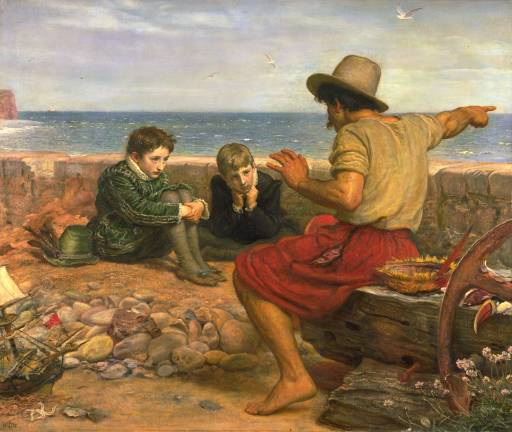
(Pictured above: “Millais: Boyhood of Raleigh”, from the Wikimedia Commons on the Storytelling Wikipedia entry (work is in the public domain))
 I have to admit when I read about Holiday by MooresCloud, the first thought that went through my head was “the world’s most expensive Christmas lights”.
At the special introductory price of $129 (RRP $199), when you compare it to the lights available on www.christmaslightssydney.com.au, Holiday by MooresCloud (‘HMC’) is expensive.
I’ve since changed my mind.
For a start, it’s unfair of me to judge HMC up against your standard, dumb set of Christmas lights:
“Putting the brains of a smartphone into each string of lights, Holiday by MooresCloud has the capability to display countless patterns, drive animations, and run applications.” (http://moorescloud.com/#holiday)
However, what makes HMC so clever is not that you can choose to display the colours of your favourite football team, but how it enables people to better understand the complex message behind MooresCloud’s original product: Light by MooresCloud (‘LMC’).
I’ve been following LMC’s progress since it was originally launched in October last year on the crowdfunding site Kickstarter – with a target to reach $700,000 in funding to kick off production.
Unfortunately, MooresCloud didn’t reach its goal, which I think in part is due to the difficulty it had in communicating what makes LMC more than just a funky, multi-coloured lamp. The description of the Light is very cool …
“Fifty-two LEDs in two million colors add up to infinite possibilities of pattern and animation. With a powerful computer and Wifi connectivity, there’s no end to the ways MooresCloud Light can work for you. It’s the light you’ll live your life by.” (http://moorescloud.com/#light)
… but what does that really mean, and how does it apply to me?
It’s not that far removed from the marketing challenges the NBN has faced over the past couple of years. To make a complex message stick, people need to make a connection between your product/service and something tangible to which they can relate. I don’t think Light by MooresCloud had managed to make that connection – until now!
What makes Holiday by MooresCloud so clever is that the form factor of Christmas lights is universal, and everyone ‘gets’ what they do. The outcome is that we can start to make our own connections with the product, and use our imagination as to how that product might apply to our own life and experience.
HMC actually got me thinking about applications for Light by MooresCloud – one scenario I thought about was in a hospital ward – where the light might be connected to a patient’s monitors and display a pre-determined colour range that gives nursing staff a quick ‘at a glance’ condition status as they walk through the ward.
I’ve also had my own first-hand experience in creating this connection between a complex concept and something tangible. One of my clients, ShoreTel, recently launched a new product – the Dock – which in itself doesn’t seem so revolutionary. It’s essentially a docking station that turns an iPhone or an iPad into a deskphone – which just sounds a little retro.
However, what it has succeeded in doing is to make ShoreTel’s Mobility Client and its benefits more easily communicated, by making that connection to a ‘thing’ that people understand – the business desk phone. ShoreTel Mobility essentially enables full enterprise unified communications capabilities on smartphones and tablets, but until the release of the Dock that concept has not been one that is easily understood and appreciated by the market.
So, would I buy Holiday by MooresCloud? Probably not – it’s still a very expensive set of Christmas lights! But what I do have now is a greater appreciation for what MooresCloud can do, and to start making those connections that are meaningful to me.
(Pictured above: “Christmas Lights”, by colormewonderfulxx licensed for re-use by Creative Commons Attribution-ShareAlike 3.0 Unported (CC BY-SA 3.0))
The ‘Handwritten’ Logo
 News Corporation announced this week that it is separating its business “into two distinct publicly traded companies, 21st Century Fox and the new News Corporation”. at the same time, News unveiled a new logo based on the handwriting of Rupert Murdoch and his father and company founder, Sir Keith.
I can only assume that the logo designers gave Sir Keith and Rupert one word each, or they have very similar handwriting, or the logo is actually a morph of their two styles.
My bet is the father and son have very similar handwriting – and that similarity must have really struck the designers when they started the re-branding project.
So what does a corporate logo based on handwriting signify? At its most basic level it ensures the logo’s originality. Each person’s handwriting is unique, so a logo with that as its origin is unlikely to be replicated, which can’t be said for text-based logos that use a computer font as their starting point.
What’s interesting is that most handwritten logos are based on the name of their founder, and often written in their own hand. There’s a nice blog post from a few years ago on famous trademarks created using handwriting , and all of those listed are based on the founder – even audio manufacturer Olive’s name is based on its founder and CEO – Oliver Bergmann. Some of these companies’ history dates back well over 100 years – Boots, Harrods, Ford, Kellogg’s – but the origin of the business will never be lost, thanks both to the name of the company and the handwritten logo associated with it.
However, News Corporation didn’t have that advantage, despite the company’s age and its strong Murdoch family connection. Originally founded as News Limited in Adelaide by Sir Keith Murdoch in 1923, and now one of the world’s largest media and entertainment businesses under singular control and direction of Rupert Murdoch, News Corp is in danger of losing a sense of its history and identity when Rupert eventually steps aside, with the next generation of Murdochs not looking likely to exert the same level of leadership, as reported in the AFR:
Although Mr Murdoch’s sons James and Lachlan will be on the company’s board (as well as that for the other company, 21st Century Fox), the ageing media titan has had to rely on non-family executives to continue the family publishing legacy.
I wonder if there was some discussion about News Corp being rebranded to “Murdoch” or “Murdochs”? With a brand name as ubiquitous, valuable and generally descriptive as “News”, that idea would have been dismissed pretty quickly.
Instead, the reminder of the Murdoch legacy will be in the new logo. The clever thing about it is that while it remains as the News Corp brand, the logo will be forever linked not just with Rupert, but also with his father. In the note to staff, News Corp CEO Robert Thomson summed it up:
Today we are unveiling a new logo that will be our emblem for this future. The name is historic and the script is based on the writing of Rupert and his father, who have provided us all with not only a name, but a remarkable professional platform.
Funnily enough, the Explore Communications logo is also based on the founder’s handwriting but not his name. However, it does mark the origin of the business. At the time, I was sitting in a conference, and the speaker was discussing how businesses are in either “exploit” mode or “explore” mode – and at that moment, I had my business name “Explore Communications” – which I wrote out on the conference notepad:
 What is really striking about the News Corp logo is how unadorned and seemingly untreated it is. You get a real sense of it simply being “written” on a page by its owner. I think that’s really significant, when you consider how impersonal and “corporate” the old logo is:

I really love the beauty that can be found in handwritten logos – you only need to look at the 10 logos called out by Logo Design Love in this blog post, and the additional logos referenced in the comments below.
Finally, I do have to mention my favourite handwritten “anti-logo” from ‘90s Australian band Custard. I laugh every time I see it – a reminder of my own pathetic attempts as a kid to create a title page at the last minute for a school project, only to realise halfway through that you haven’t left enough room for all the letters:

(Pictured top: “Writer in the park”, by Thomas Nugent licensed for re-use by Creative Commons Attribution-ShareAlike 2.0 Generic (CC BY-SA 2.0))
Playing into the Hands of Scammers
 Last week I had a call from my home phone line provider – or so the person on the other end of the line told me. Not long into the call we reached a stalemate, because I believed that the service provider was using an authentication model that compromised my personal security, a model that ultimately serves only to condition consumers in a way that opens the door for phone scammers.
Funnily enough, the same day I read about one of these scams in my local paper (you can see the same article online in the Mudgee Guardian: Telstra warns of scam callers).
I’ve had these calls before, where the company you are using for phone/internet/electricity/banking/insurance wants to show you how they can save you money, or somehow improve the service they are providing.
From my experience, most companies seem to use the same flawed model.
Here’s a rough idea on how the call goes:
Caller: Hi, Mr Aungle, my name is X and I’m calling from Company Y. I wonder if you have a few minutes to talk about how we can improve the services we are currently providing to you?
Me: Sure.
Caller: Before we start, I’d just like to verify that I am speaking to the authorised account holder. To verify that I am speaking to the account holder, can you please tell me your date of birth?
… and, that’s as far as we get.
On the call last week, I then spent the next few minutes carefully explaining why I was not willing to give him my date of birth. Given that he called me, why should I verify who I am, when there is no way for me to verify his identity?
In a weaker moment, I might have given him my date of birth without thinking, but why are these companies conditioning us to accept without question the bona fides of telemarketing calls? Instead, I used the opportunity to let the guy know that he should tell his company (if he was really from that company!) why I wasn’t willing to deal with him, and to come up with a more secure way of creating the trust required to do business over the phone.
Most alarmingly, I had the feeling from his reaction that I was the first person to respond to him like that.
The irony was that I had no way of know if my message would get through, because I had no way of knowing if he really did represent that company. Hence my whole argument …
The problem is that we end up with people accepting without question the identity of a caller, we get to a situation where people are believing this sort of stuff (via @darrenpauli’s Twitter stream today):
https://twitter.com/darrenpauli/status/338808050083307521/photo/1
Never Criticise the Competition: it’s not Politics
 A couple of things this week reminded me of one of the first rules I spell out when I am giving PR or social media advice to a client: ‘never criticise the competition’. One came up today with Microsoft’s launch of the Xbox One, and the other is a pattern of behaviour I’ve been following on Twitter which culminated in a pair of tweets yesterday.
There will always be exceptions, but by-and-large there is nothing to be gained by attacking the opposition – unless you are in politics. You are diverting the attention away from what you are there to talk about; you are giving your competitor publicity without having to lift a finger; and most readers will take what you are saying with a very large grain of salt – you’re hardly the independent observer, are you?
Case in point is the headline in today’s AustralianIT: ‘Microsoft Xbox One to target Telstra’s T-Box market’. While I don’t think Microsoft or its spokesperson mentioned the T-Box in this instance, it’s the sort of outcome you can expect if you do call out a specific competitor.
I think the journalist made his own conclusions as to which device was being challenged by Microsoft’s new product, and the result was a mention of the main competition in both the article’s headline and lead paragraph:
“MICROSOFT’S expansion of the Xbox One as an entertainment hub will put it head-to-head against Telstra’s successful T-box in the Australian market.”
Much more directly to my point about never criticising the competition was a series of to-and-fro on Twitter resulting from an IT vendor’s launch of a product recently that seems to have caught its competition napping. I was involved in the launch here in Australia, so I’ve been following the Twitter chatter in relation to the product, and these two tweets from yesterday (pictured below) perfectly encapsulate the concept. I’ve blurred the identities of all three players involved, but let me take you through it.
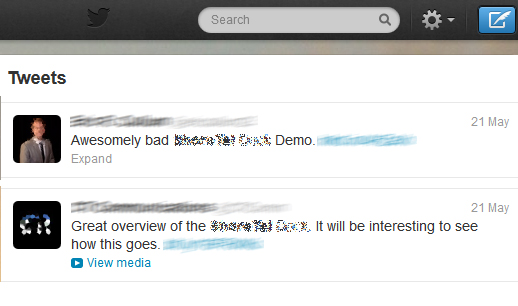
The first tweet is from one of the vendor’s integration partners, starting “Great overview…” Not long afterwards it’s followed up by the tweet “Awesomely bad <blurred-out product> Demo.” What’s funny is that both tweets point to exactly the same YouTube video.
I took a look at the profile of the second tweeter, which gives no clue as to his employer. A quick Google search reveals that, as expected, he works for one of the launch vendor’s main competitors.
So, if you are thinking about reacting publicly to a competitor, it’s important that you stop and think for a minute before you do it. Just remember that it’s not politics and, unless you are the founder of the company or the inventor of the technology, there is usually no ideological high-ground for you to take. You’ve probably chosen the company you’re working for based on a combination of one or more factors – including salary, employment conditions, corporate culture and reputation, the challenge, career opportunities and professional development .
And, given the amount of churn in the IT sector, it’s quite possible that, in a couple of years’ time, you will be working for the competitor that you were criticising. It’s a completely different proposition to switching political parties.
(Pictured top: “Barack Obama presidential debate preparations”, By Pete Souza (White House (P100212PS-0320)) [Public domain], via Wikimedia Commons.)
The Cobbler’s Children
 After more than 12 months in business, I’ve finally published a page of reference clients and some descriptions of the type of work with which Explore Communications has been engaged (see ‘Our Work‘).
It’s a little bit like the old saying that a “cobbler’s children don’t have shoes” or any number of similar expressions that I discovered when I was doing some research into the origin of the expression – including my favourite: “the minister’s children have no morals”.
Generally speaking, the phenomenon is called “vocational irony” – and in my case it comes down to being too busy to do Explore Communications’ own marketing!
So, what sort of work has Explore been doing over the past year?
It’s been really varied, ranging from tradition agency-style PR and case study development through to complete marketing strategy and program management. Clients have been predominantly in the IT space, but have branched into other fields too, including insurance, sport and retail. Explore has also been engaged in ‘pro bono’ work for start-ups, often based on a quid pro quo arrangement (the most recent trade was free yoga classes)!
The projects to date has been rewarding, often challenging and always educational. I’m really looking forward to the year ahead, and the opportunities that 2013 and beyond will bring.
(Pictured above: “Cobbler’s Shop, Holmfirth”, Copyright michael ely and licensed for reuse under a Creative Commons Attribution-ShareAlike 2.0 Generic (CC BY-SA 2.0) licence.
Social Media and the CEO
 Interesting blog post recently from Thomas Tudehope at Ogilvy PR – “Should CEOs and executives tweet?”. What makes it doubly interesting is that it was published in the aftermath of the social media furore created by CEO of Australian retailer Myer, Bernie Brookes. Brookes was commenting on the Australian Government’s decision to fund a National Disability Insurance Scheme (NDIS) by raising the Medicare levy, that it would hurt Myer’s sales. (See Brookes’ comments reported in news.com.au as an example.)
While Brookes didn’t make his comments via Twitter, there is every chance he would have done so if he was an active tweeter.
It’s not really a surprise that Brookes isn’t on Twitter. Myer is an old school retail organisation (in fact, it doesn’t seem to have changed much since I was working there part-time as a university student more than 20 years ago) and Brookes is described as a ‘veteran retailer’ in the press. At the very least Myer does have a Twitter account and Facebook Page, and it did apologise for the comments made by its CEO:
We are very sorry to those who have been hurt by our comments & want to make it very clear that we support the introduction of the NDIS.
(https://twitter.com/Myer_MyStore/status/329755277031247874)
It was probably too late by then, with the #MYER hashtag on Twitter already doing plenty of damage to the brand.
So, would it have made any difference if Brookes was on Twitter?
On the face of it, Brookes’ comment as a tweet would have made matters worse for Myer. There would have been an instant response and Twitter community would have had a direct target for its anger.
However, if Brookes had been an active Twitter user, it’s more than likely he wouldn’t have made the comment in the first place. Why not? Because he would have been far more sensitive and aware of the impact his words have on the wider Australian community.
Instead, Brookes made his NDIS comments to a Macquarie Investment seminar – a context and an audience where Brookes’ comments would have seemed reasonable – and I’m sure very few people in the room would have blinked an eye. (You only need to read the straight reporting in The Australian’s Business section for an example.)
So, should Brookes be on Twitter? Ogilvy’s Tudehope would say that he should be, with the right preparation and training. However, he states, the “single biggest obstacle for executives looking to become more socially savvy is having the appropriate social media knowledge, time or technical skills.”
I disagree. I don’t think every CEO or senior executive should be on Twitter. While most of them wouldn’t have the time to manage an account themselves, more importantly I don’t think many have the inclination or desire to communicate that way. Twitter is not for everyone (even those in the media industry!) and I think it is just as lacking in authenticity to ‘ghost tweet’ for a CEO as it is to force a senior executive onto Twitter in the first place, simply because you think it’s the right thing to do.
Over the last few years I’ve had the opportunity to work with senior executives who have expressed a desire to learn more about Twitter and start actively participating. My approach is first of all to question them on why they want to get involved and what they feel they would get out of it. I also like to sound out what sort of engagement they have already as users of social media.
So, should Brookes be on Twitter? I doubt it. I don’t know much about the man himself, but from what I know about the retailer and its management style, I can’t see him as someone who would readily take to social media.
That said, while Brookes doesn’t have to be an active participant, what he does need to understand is how social media works and what sort of impact his public comments have or will potentially have on the online community, which is ever-approaching the wider Australian community.
I’m sure that is something his media and marketing advisors are doing right now.
Social Media, Coca-Cola and Me
 I consider social media as a marketing communications channel, and not one that necessarily has a direct impact on sales, so I’m a bit skeptical of any claims made by SMEs (social media experts!) that social media can directly influence sales.
As a prime example, in news last month Coca-Cola hasn’t seen any direct correlation between what it terms “online chatter” and short-term sales (see “Buzzkill: Coca-Cola Finds No Sales Lift from Online Chatter” in AdAge). As at the time of writing , Coca-Cola has clocked up over 63 million likes on Facebook, so it’s in a pretty strong position to comment.
While I advise my clients that social media is an important component of the company’s marketing strategy (and a very cost-effective one for start-ups), I would never suggest that your sales strategy can entirely depend on it.
As a customer engagement and customer service channel, applications like Facebook and Twitter can be used really effectively. In terms of service, as a customer if I want a more rapid response from a company than traditional phone or email contact methods, I will generally tweet my question or complaint. It’s effective because the interaction is played out in front of the wider social group, not secretly between you and the company in question.
What’s interesting is my own experience with Facebook and LinkedIn advertising. Offered free advertising vouchers for both sites, I’ve now tested both out with mixed results.
For Facebook, I set up a test ad for the page of one of my clients and, in the space of a week, we had quadrupled ‘Likes’ for the page.
However, that did not translate into an upward trend in sales. In fact, I doubt there was any correlation at all between new sales generated and the Facebook page likes.
What it did achieve was a massive surge in audience, via a channel that seems to be pretty engaged, which might have some longer term outcomes – provided we can keep the engagement going. And that bigger audience does give us the opportunity, through Facebook’s ‘Reach’ function in the Pages Admin area, to get detailed information on the demographics of our audience – which we can use to plan future marketing campaigns.
For LinkedIn, I tried an ad for this business – Explore Communications – with pretty dire results. Similarly to Facebook, you can target your ad to a particular demographic profile and you are very limited to how much information you can display, but I found that there has been virtually zero response – the two spikes of clickthroughs have been when I first submitted the ad, then revised and re-submitted the content, which I put down to the LinkedIn administrators reviewing the ad before approving it!
Sure – my experience is completely at the other end of the spectrum to Coca-Cola’s, but it’s something worth thinking about for start-up organisations looking to the virtually ‘free’ channels that social media offer for marketing your products and services. At this stage in social media’s evolution, it’s very easy for a potential customer to like your page or follow your tweets. It’s another thing again for them to buy.
By the way, I haven’t like Coca-Cola’s Facebook page. I can’t stand the stuff.
(Pictured above: “Coca-Cola, I”, By Newtown grafitti, available under a Creative Commons Attribution 2.0 Generic (CC BY 2.0) licence.)
When Did IT Suddenly Go Mainstream?
When did IT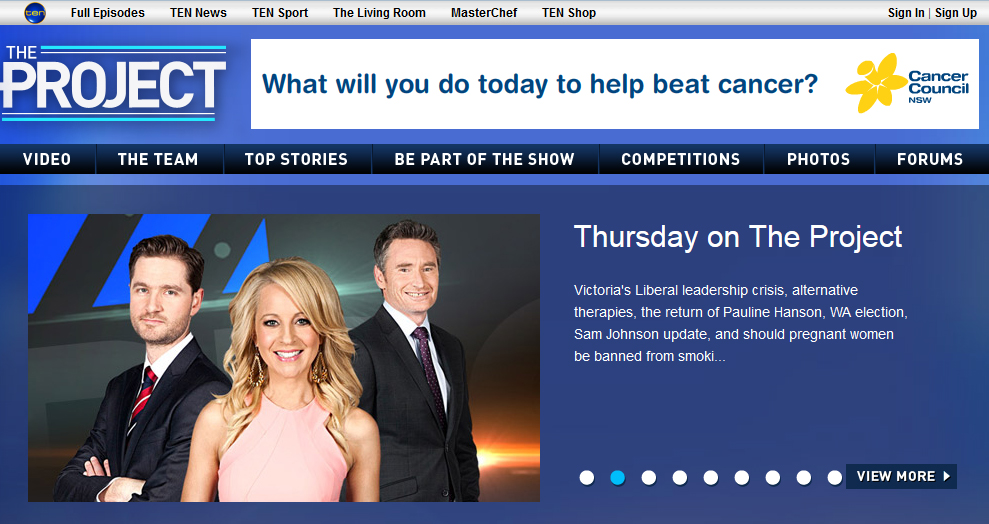 suddenly go mainstream? This morning listening to local radio over breakfast, I heard Ry Crozier, journalist with ITNews.com.au interviewed on ABC Illawarra about the NBN. Seventeen years ago, when I started out in the IT industry, it would have been a minor miracle for a specialist IT journalist like Ry to appear on mainstream broadcast media. Back in the mid-1990s IT (and IT media by default) was most definitely niche.
I remember being interviewed by Mia Freedman in a work context many years ago for Channel 9’s Today show – but the piece ended up being a lifestyle segment about working from home, rather than about IT. I tried to cover technology with reference to the relative merits of ADSL and ISDN, mobile data, security and IP telephony (I even had some gadget in my pocket from Telstra that I’d been asked to mention) – but that section of the interview never made it to air.
Back then, if someone asked what I did at a party, I used to say I worked in the computer industry, which I resorted to when people’s eyes would glaze over if I was any more specific than that. Now, everyone seems to know what cloud is, has an opinion about the NBN, and can talk knowledgeably about the relative merits of mobile data plans.
My kids can reliably tell me about Apple’s latest iPhone, iPad and iMac; or the differences between Windows 7 and Windows 8 as an operating system.
So when did IT go mainstream? Ironically, you could date it from March 2008, when ABC’s MediaWatch created the “Phantom of the Internet Trophy” in an episode featuring journalist and IT publisher David Richards. I was up in Queensland for the MediaConnect Kickstart IT media conference and during the day word spread that David would be appearing on that night’s MediaWatch episode. Just before it was due to go to air at 9:15pm, dinner tables emptied en masse as everyone headed off to find the nearest TV. An appearance on MediaWatch, while rarely a positive experience for a journalist, was at least validation and recognition for IT media (and by logical extension, the IT industry) from the mainstream press.
Now, you’ll see IT journalists popping up regularly in mainstream media. To pick a few, Seamus Byrne has a regular spot on Channel 7’s The Morning Show program, Angus Kidman appears on The Project on Channel 10, and ZDNet journalists, including Josh Taylor, are regularly interviewed for ABC TV and Radio news.
So why has this happened? Well, IT has become much more pervasive in our everyday lives.
According to the Australian Bureau of Statistics (ABS), “in 2008-09, nearly six million Australian households (72 per cent) had internet access, a sizeable increase from around one million (16%) in 1998.” (ABS Report, ONLINE @ HOME). That number has continued to climb.
Approximately 62 per cent of Australians were using social media in 2012 (see the State of Australian Social Media 2012 infographic, compiled by Sensis, then developed and created in association with the Yellow Pages and AIMIA).
And, based on AIMIA research, 38 per cent of Australians own a tablet, up from 16 per cent in 2011, and 76 per cent have adopted smartphones. (8TH ANNUAL AUSTRALIAN MOBILE PHONE LIFESTYLE INDEX, the AIMIA Mobile Industry Group).
Finally (and this is my own thumb suck observation), use of some form of cloud service closely shadows household broadband access (at 73 per cent in 2010-11, according to ABS), smartphone adoption and social media use.
However, despite this rapid uptake of computing in Australia, there is still a huge amount of uncertainty in the community, largely because the complexity of the concepts and technology underpinning IT are still highly visible. You only need to look at the intensity of the NBN debate today, and the “facts” that both sides of the debate are able to push, largely unchallenged, into the media (see, as an example, “The real NBN casualty”, in Technology Spectator).
 explorecomms.com.au