Reading Books and Social Media Infographics
 I wrote two blog posts last week – one on repetitive reading for happychild online parenting magazine, and the other on social media infographics for Open Forum, an online discussion site run by Global Access Partners.
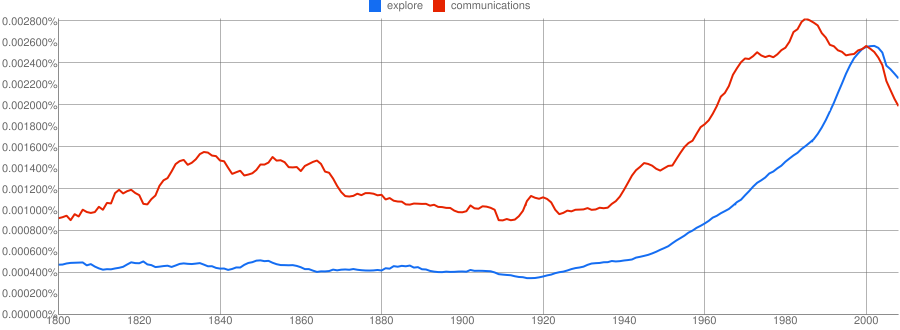
You’d think the two posts have nothing in common, apart from both being a little tongue-in-cheek. However, what got me thinking about the social media infographics piece was a link to a TED talk sent to me by a colleague – What we learned from 5 million books.
At an individual level, repetitive reading has been shown to increase learning ability in children, while collectively, thanks to Google ‘reading’ (digitising) over 15 million books, it is allowing us to use the data to develop greater insights into history and society, such as Google’s Ngram Viewer.
So how does this relate to my blog post on social media infographics?
Well, the great thing about social media is that we are effectively digitising social interaction in real time – something we have never had the opportunity to do before. While social media users are a subset of the general population, it is an ever-growing subset. In future years, I can see historians, anthropologists, sociologists and more tapping into this real-time data to draw conclusions and identify trends that we can’t see today – just as the researchers behind Ngram Viewer are doing with the 15 million+ books scanned by Google.
Still not seeing the link?
These social media infographics with which we are constantly being bombarded are largely meaningless. Just sets of statistics and observations for the here and now, designed to help someone make a buck. What I’m waiting to see is the research and analysis that will be done on social media in 10, 30, 50 years time on the people, the events, the interactions, the conversations, the tweets, and the images that shaped things.
On a completely different note, 15 years ago I came up with an idea for the perfect spelling/grammar checker. Looking at Google Books and Ngram Viewer, I think I might revisit that now … If you’ve got money to invest, and want to hear more, please let me know!
SOPA, PIPA and Kim Dotcom
 I love it when world events turn on a PR opportunity that seems too good to miss.
In this case, we’ve got two very controversial bills about to be debated in the US Senate, and the arrest of a larger-than-life Internet entrepreneur in New Zealand.
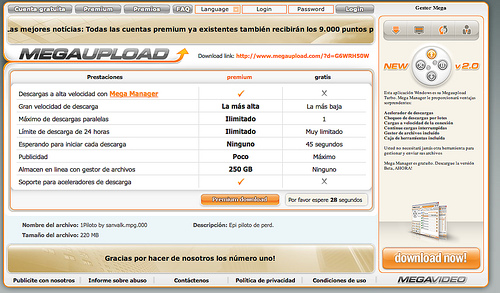
From a PR sense, the timing had to be deliberate. With the Protect Intellectual Property Act (PIPA) and the Stop Online Piracy Act (SOPA) due to go before the US Senate but facing a mountain of opposition from the Internet community (see for example, the Huffington Post), Megaupload’s founder Kim Dotcom is arrested in New Zealand to face extradition proceedings on charges relating to money laundering and copyright infringements.
Wow – what a perfect subject for the pro-PIPA and SOPA camp! Kim Dotcom – yes, he changed his name – arrested in his (rented) $30million mansion, complete with a fleet of luxury cars, shotguns, giraffe and rhino statues, and a life-size inflatable Russian T72 tank. His past as a computer hacker, ‘phreaker’ and software pirate is referenced in various media reports.
Unfortunately, even with the most perfect PR opportunity presented by Megaupload and Kim Dotcom, there seems little prospect that PIPA and SOPA will ever become law in their current form. That’s in part due to the massive Internet-based campaign opposing the legislation, but also to the grey areas involved with Megaupload.
If you haven’t seen it, take a look at the Megaupload video on YouTube, which includes endorsements from a range of top-selling US artists (seen via Technology Spectator). Then there are the ramifications of the case on cloud computing as a whole. With Megaupload shut down, thousands of legitimate users of the service now find themselves without access to files and data. This ITNews article is worth a read on some of the potential legal ramifications.
While the Kim Dotcom case is probably working spectacularly well as an anti-piracy example with the general public, the IT and business community is going to be far more concerned over the longer-term implications the case will have on cloud computing, data sovereignty and regional jurisdiction.
(Pictured: “megaupload”, FonsoBey, available under an Attribution-NonCommercial-ShareAlike 2.0 Generic (CC BY-NC-SA 2.0) licence.)
Bring on the NBN
 Back from holidays this week, and immediately into the thick of things from a work perspective.
I spent the past week camping at Jervis Bay on NSW’s South Coast, without mobile phone reception (let alone internet connection), which is the perfect way to have a complete break from work. (Pictured: Murrays Beach, one of those idyllic spots on the South Coast without mobile reception.)
However, that lack of connectivity has extended into my working week. My ISP’s ADSL has been down in my area for the past day, making things very challenging with a press release to issue for a client this morning. I’ve had to resort to using a 3G pocket WiFi modem, roaming through the house looking for the best spot for reception. The modem is flaky at the best of times, and throughput is at snail’s pace when it does decide to connect.
Not only that, due to the configuration of my various computing devices, I was forced to rely on an iPhone to distribute the press release. If anyone says they can do business solely on an iPhone over 3G, they are either stupid or pulling your leg. At least I can be grateful for the fact that iPhones now do copy and paste …
I also managed to (very painfully) add this blog post over the 3G modem – although thankfully not via the iPhone.
Bring on the NBN is all I can say.
“The Tablet Apple Tried to Stop”
 As a media spokesperson and lucky enough to own a unique name (Martin Aungle), I’ve had a Google Alert set up for some time now notifying me of any personal mentions in online news outlets. It’s been a pretty quiet channel – most of the times when I am quoted, it’s usually as “a company spokesperson said …” – however, there was a flurry of alerts that started late last night and continued into the early morning. Coincidentally, I had a jump in Twitter mentions and replies (when a Twitter user references your Twitter handle in a tweet).
The origin for all the activity was a picture I snapped of a Samsung tablet advertisement in last Sunday’s newspaper and posted on Twitter, along with the comment “How could Samsung resist using it? #applesamsung”.
The #applesamsung hashtag refers to the ongoing legal battle in Australia between Apple and Samsung which had stalled the release of Samsung’s Galaxy Tab 10.1 in the local market. Last week, the case made it all the way to the High Court, with Apple’s losing its final avenue for appeal.
With the way clear for Samsung to start selling the Galaxy Tab, it couldn’t resist referring to Apple in its advertising campaign – “THE TABLET APPLE TRIED TO STOP.”
It’s a controversial marketing strategy – referencing your biggest competitor as the headline to your advertising campaign – but it speaks to the sheer market dominance of Apple’s iPad, and the legion of dead or dying tablets it has already left in its wake (see my post on HP’s Touchpad as an example).
What’s interesting is that Apple has largely left other tablet manufacturers to fail on their own – a strategy that seems to have worked spectacularly well to date. But Apple obviously views Samsung as the big threat to its market dominance and it’s ironic that, as a result of its failed legal bid, Apple has effectively become the biggest endorsement for Samsung’s new product.
While it’s a controversial ad, the reaction to my photo has taken me by complete surprise. It’s been posted on reddit, Engadget, 9 to 5 Mac, PCWorld (calling me a “marketing pundit”!), Apple Insider, The Mac Observer, NBC, and IDG News Service, to name a few. And there seems to be many more out there that haven’t attributed the picture to me. What’s disturbing is that, apart from a couple of bloggers, nobody has asked for my permission to republish the photo.
Obviously, with such a personal interest in the way this news has spread, it’s fascinating to see how this one tweet about a print advertisement in a local paper on a quiet Sunday morning in rural Mittagong has ended up on news sites and blogs around the world.
It’s an insight I’ve filed away for future use …
Choosing the Wrong Flag to Fight Under
 I was appalled when I first saw the founder of Youth Off The Streets Father Chris Riley as the face of Clubs Australia advertising campaign against gambling reform.
It wasn’t that I was appalled from a political perspective (I’m not going to reveal my position on pokies reform) – I was appalled by Father Chris Riley’s strategy to connect his charitable organisation in such a public way with a lobby group on what is a highly-divisive issue.
Of course, Father Riley has every right to express his opinion:
“I think the most important thing for me is the randomness of policies which frustrates me, that one man gets in and a minority government has the incredible power to make such a big decision against pubs and clubs and I just don’t think that’s fair.
I also believe that legislation never deals with human problems. We need certainly education, we need counselling, we need programs out there in the field so that people can access them and at the moment there’s not enough of those.”
(Taken from an interview with ABC Radio’s The World Today: http://www.abc.net.au/worldtoday/content/2011/s3385372.htm).
However, if I was advising him, I would have urged Father Riley to express this opinion under the Youth Off The Streets banner, not under Clubs Australia’s brand. The temptation must have been enormous. According to the SMH, “2.1 million brochures … flooded into the mailboxes of voters in 46 electorates”. That sort of opportunity to get his opinion out there, and promote Youth Off The Streets at the same time, must have been very hard to resist.
It’s not even the issue of the links between Youth Off The Streets, Clubs Australia and poker machine manufacturer Aristocrat Leisure that would have concerned me. At a fundamental level, the problem is that the two organisations – Clubs Australia and Youth Off The Streets – have completely different agendas, and I believe the end result has been damaging to the reputation and public image of both organisations.
In its opposition to proposed poker machine reforms, Clubs Australia has joined with the Australian Hotels Association, the Australasian Casino Association and the Gaming Technologies Association, as part of the Won’t Work Will Hurt campaign which is primarily motivated to protect the significant revenue streams that members of each of these industry bodies currently enjoy from poker machines.
On the other hand, Youth Off The Streets is a non-denominational community organisation working for young people who are disadvantaged, homeless, drug dependent and or recovering from abuse.
It made no sense at all for Father Riley to join the poker machine gambling debate as part of the Clubs Australia and the broader Won’t Work Will Hurt campaign. The main perception people will have is that he is motivated by the same reasons as the Won’t Work Will Hurt members – to protect his charity’s revenues, with reports that Youth Off The Streets “received $3.5 million in funding over a decade up to 2009 from hundreds of clubs in NSW and $850,000 alone from ClubsNSW“.
Instead, if he had expressed his opinion purely as a representative of Youth Off The Streets, while there may have still been questions about the charity’s connections with the gambling industry, it would have given him far greater opportunity to shape the debate towards his organisation’s primary mission and goal to support young people in difficulty.
(Pictured: “Pokies”, Denni Schnapp, available under an Attribution-NonCommercial-ShareAlike 2.0 Generic (CC BY-NC-SA 2.0) licence.)
Why PR Exclusives are a Bad Idea
 I’ve just had another experience this week that reinforces my view that PR exclusives are a bad idea. For the uninitiated, a PR exclusive is where you give your ‘news’ to a particular media outlet either before you issue it more generally, or where you only give the story to that one publication to the exclusion of all others.
That said, there are (extremely) limited circumstances where I would do a PR exclusive, but I’ll go into that later.
Generally, your PR agency or in-house PR manager will be keen to do an exclusive to ensure much bigger coverage of your story in what your PR team considers to be a ‘tier one’ media outlet.
There are a number of circumstances where an exclusive would be considered:
- A big contract win – generally involving some combination of: big dollar value; prominent brand or government agency; multi-year agreement; new product or service; very competitive environment.
- A client case study – again, involving some combination of: prominent brand or government agency; new product or service; great business outcome; quantifiable benefits or outcomes.
- A major business announcement – which might include financial results, the launch of a new product or service, a major award, etc.
My most recent experience was with a client case study this week – but it demonstrates most of the reasons why PR exclusives are a bad idea.
I was on the periphery for this one, with another company and its PR agency driving the process. In fact, the PR agency involved started working on the opportunity five months earlier, and tried to pitch what was then a contract win as an exclusive to a couple of the ‘tier one’ publications. One of the publications expressed an interest, but wanted to wait for the project to be completed and the benefits fully realised before running with the story.
With the project in question having a pretty quick implementation period, within a few months the PR agency was back talking to the publication, and lining up the interview and photo shoot with the client. Then came the waiting game. We got word that the story had been filed to appear the following week and, when it didn’t appear, we were told that the story had been pushed to make room for other news. It’s now not likely to get a run until January or February next year (provided we can keep it exclusive for them).
Now, I’ve been in this situation before. When the editor is reviewing upcoming articles for the section next year, I know what’s going to be asked:
“Why are we featuring this case study? That implementation happened six months ago.”
The last time that happened to me, the story never ran.
Let’s stop for a minute and look at the positives from a PR exclusive, if the story does see light of day and get published.
- You get coverage for a story in a tier one publication that might not have covered the story if you went out on general release to the media.
- You most likely get in-depth coverage, with photography, which will ensure higher readership.
- Your spokespeople are interviewed and featured (possibly with a photo) in the article.
Now, let’s think about the negatives:
- It may take weeks (or months!) for the story to appear and, by agreeing to an exclusive, that prevents you from talking about your news publicly until it does publish. By publicly, I’m not just talking about the media. Generally, you will want to ensure that the story stays secret, so you can’t talk to your partners or customers about it either, or use other channels such as your website or social media to publicise the story.
- It limits the coverage your news will receive in other publications – one, because it has already been covered extensively by the exclusive media outlet; and two, because it is most likely ‘old’ news when it does appear (see point 1 above).
- Other journalists and publications will be angry that you have given the news as an exclusive to one publication, making them less likely to run your story in their outlet and, longer-term, it is likely to damage the relationship your organisation or your PR agency has with those journalists or publications that feel unjustly excluded.
- Your story might never run. You are dealing with media outlets, where the big news of the day will always push your story to the backburner. Think about all those PR agencies in the IT sector pitching their exclusives the week before Steve Jobs died! Given that the outlet knows that it has the luxury of an exclusive, there is no haste to publish and eventually the story either gets forgotten or becomes too out-dated to still be newsworthy.
When you think about it, it all comes back to asking the question:
“Why am I doing PR?”
The answer has to be:
“To tell my organisation’s story.”
To me, a PR exclusives more often than not gets in the way of this core goal. Telling your story is much more than just a feature article in a tier one publication.
However, I did say earlier that there are (extremely) limited circumstances where I will do a PR exclusive. The basic question you need to ask yourself is this:
“Is this the best and most effective way I can be telling this story?”
There is a lot more to it than just that, but I want to keep some of my intellectual property exclusive now, don’t I? 🙂
(Pictured: “School Beast Freed”, Martin Deutsch, available under Creative Commons Attribution-NonCommercial-NoDerivs 2.0 Generic (CC BY-NC-ND 2.0) licence.)
Why Video Games are Bad for Kids *ducks*
 I wrote a guest post last week for www.happychild.com.au – “Replacing a Playstation with an Electronic Drum Kit Improved Our Children’s Behaviour” – all about my own family’s experience with video games. It was a difficult piece to write, given that I work with a lot of people in the IT industry, and I’m probably in the one percent in my work environment who doesn’t own, and has no intention of owning, a video games console. That said, I’ve been really encouraged by the positive comments the story has attracted.
I’m not against video game per se, but I’ve seen the impact they have on my own kids and I don’t think they have a single positive influence on a healthy and fully-functional child. I’d much rather that my kids are playing outside, reading books, playing sport and music, and interacting with their family and friends.
My story was that we finally made the decision to replace our PlayStation with an electronic drum kit and keyboard, and the effect has been amazing. We have much happier and engaged kids, who are also developing real ability and talent as musicians – a skill that they can carry through life in a much more meaningful and creative way than simply knowing how to press some buttons and blow away some virtual scumbag in the latest first person shooter game.
(Pictured: “Drums”, toner, available under Creative Commons Attribution-NonCommercial-ShareAlike 2.0 Generic (CC BY-NC-SA 2.0) licence.)
Is Self-interest Ruling Australia’s Piracy Debate?
 I appreciate that internet piracy and the protection of intellectual property is a hotly-debated issue at the moment, and I’ve already made my position clear (see Piracy and ‘The Slap’). A large part of the problem is that intellectual property law is still struggling to come to terms with the fact that the Internet and digital content have removed most of the physical jurisdictional barriers that have always defined IP.
I was listening to some commentary on the radio yesterday – and the same justification for piracy comes up time and time again. The justification is that consumers have the right to access content, regardless of their region. On the radio, the example was given of TV shows broadcast in the US that Australian audiences can’t access.
Renai LeMay, in today’s Delimiter, expressed a similar view:
Australia’s love affair with piracy is not an effort to gyp content creators of their rightful remuneration for that content — it’s a simple attempt to get at content which is too hard to consume otherwise. Once again, audiences want to be able to get whatever content they want, at the same time as everyone else, on whatever device they want to be able to view it on, and at a reasonable price.
While that view is valid, why should the consumer’s self-interest hold sway over the ISP’s self-interest, the artist’s self-interest, or the content industry’s self-interest?
Consumers don’t have a right to access content.
All that has happened is that we don’t have the same barriers to access content that we used to have 20 years ago. If people are jumping up and down about their right to access TV shows broadcast in the US, why aren’t they jumping up and down about their right to see the latest Broadway musical or Justin Bieber concert?
I don’t remember anyone getting upset 20 years ago when Twin Peaks was on our TV screens six months after it was broadcast in the US …
(Pictured: “Pirate Deck at Club Earl”, Earl-What I saw 2.0, available under Creative Commons Attribution-NonCommercial-ShareAlike License 2.0 licence.)
Freelancer.com – a Marketplace for Spammers
 Cleaning up the spam comments from my blog always raises a bit of a chuckle, thanks to the poorly-worded “compliments” I get for my posts. It’s also bloody annoying. Here are a couple of examples from today:
Ahaa, its fastidious conversation about this piece of writing at this place at this weblog, I have read all that, so now me also commenting at this place. (from https://explorecomms.com.au/2011/11/16/acma-australian-smes-using-internet-%e2%80%93-but-not-social-media-%e2%80%93-for-business/)
Can I just say what a reduction to seek out somebody who actually knows what theyre talking about on the internet. You positively know how you can bring an issue to gentle and make it important. Extra individuals must learn this and understand this side of the story. I cant consider youre not more popular since you definitely have the gift. (from https://explorecomms.com.au/2011/11/17/nothing-like-australia-well-nothing/)
I’ve often wondered what goes on behind the scenes and who is involved in producing this spam – and a project notification I received today from Freelancer.com gave me some insight:
Manual Commenting Project
I’m looking for someone to do manual blog commenting on URLs I provide to them.
I’m paying $0.05 per approved comment (so the link must be live). I will regularly provide new links for you to comment on.
Make the comments relevant to get them approved.
For a $30 project -> 600 approved comments.
(See http://www.freelancer.com.au/projects/Internet-Marketing-SEO/Manual-Commenting-Project.html)
—
Given that I wrote some pretty disparaging things about Freelancer.com a few weeks ago, my opinion is only hardened when I see first hand on my own blog what could be the results of a Freelancer.com “project”.
“While Freelancer.com may have been established with the best intentions, in my field of expertise, all that it is succeeding in doing is filling the Internet with dross, encouraging plagiarism, manipulating social media and allowing unscrupulous operators to source services cheaply and easily to further their dodgy agendas.”
Since that last post, I have persevered with Freelancer.com – paring back my areas of skill to reduce the amount of dross I get in my inbox, and trying to limit my email notifications to once a day (note to Freelancer.com – I’ve had even more emails since I tried to do this).
I’m now going one step further and deleting my account. I’m not prepared to support a site that provides a marketplace for spammers.
(Pictured: “20080621 Spam 01”, PP Martin, available under Attribution-NonCommercial-NoDerivs 2.0 Generic (CC BY-NC-ND 2.0) licence.)
“I am Calling from the Windows Department”: #Telemarketing Basics
 Now that I’ve got my own business, I’m spending a lot more time working from my home office – and spending a lot more time fielding telemarketing calls, including plenty of dodgy ones.
The one thing these calls have in common is that the agent making the call is usually not very well briefed, and isn’t prepared to handle a wide variety of responses or scenarios that might eventuate. There’s a good reason for that – they are probably only after the poor sucker who swallows every word uttered as the truth.
However, the scammers might be more successful if they were prepared for the conversation to take a different course to the one they expect.
One call I got last week is one of my favourites (I’m taking some liberties with the transcript – shortened for illustrative purposes) –
“Am I speaking with Mr Aungle?”
“Yes”
“Excuse me sir, I am calling from the Windows Department. We have been notified that your computer has a security problem.”
“Really? How did you receive this notification?”
[At this point, we already have a problem with the direction the conversation is taking. The agent relies on repeating the original message.]
“Well, I am calling from the Windows Department. We have been notified that your computer has a security problem.”
“OK – but what sort of security problem was reported?”
[Now I’m starting to have a bit of fun, and I figure that the longer I can keep the person talking, the less time they have to scam someone else. Again, the agent has no option but to repeat the same story.]
“Well sir, we have received a report that your computer has a security problem.”
“Sorry – What was the company that you said you were calling from?”
“I’m calling from the Windows Department.”
[Wow – that doesn’t even sound like a company. After a few more attempts to get past me, the agent abruptly hangs up.]
—
For what it’s worth, putting a more developed telemarketing script in the hands of the agents might lead to a better success rate for the scam. That said, the business plan behind the scam is probably based on targeting only the most gullible, so I’m sure in the script it says “if the person seems even vaguely to know what he/she is talking about, hang up immediately!”
—
I did receive a second, slightly less dodgy telemarketing call last week. Again, here’s an edited transcript of what took place:
“Good morning, I’m wondering if you can spare a minute to answer a short survey on your children’s education.”
“Maybe. Can you tell me what the survey is for?”
“We’re doing the survey to gather information so that we can improve the education services your children are receiving.”
“And who are you doing the survey for?”
“I beg your pardon?”
“Who commissioned you to do this survey?”
“I’m not sure what you mean.”
[At this point, warning bells are going off everywhere. Here’s somebody ringing people up for a survey, and they don’t understand the basics of how legitimate surveys are usually conducted.]
“Are you doing this on behalf of the government, or a private organisation?”
[Not great, when the person you are calling starts to give you help.]
“The survey is for A Better Chance for Kids.”
“What is that – a government organisation, a company or a charity?”
“A Better Chance for Kids is helping to improve the education services your children are receiving.”
“No thanks – I don’t want to be part of your survey.”
[Call ends.]
Now, that might have been a legitimate call from a not-for-profit or a government organisation, and I gave the agent plenty of opportunity to convince me. However, at no point did I feel confident that I knew what organisation (if any) the caller was representing. Also, some of the really basic stuff that most people in the community know – that surveys are usually commissioned – should have been factored into the scenarios in the telemarketing script.
OK – so these two calls are at the extreme end of bad telemarketing practice, but it’s scary to think how successful scam telemarketing calls might be with a little more thought and effort put into developing a range of scenarios to ensure that the calls continued on the path towards their original goals (whatever they might be – I’m not going to be the one to find out!)
The moral of the story is, if you are trying to increase the success rate of a telemarketing campaign (hopefully an above-board one!), make sure that you:
- Spend more time and effort up front in fine-tuning your telemarketing script;
- Cater for as many potential scenarios and conversation paths as you can; and
- Train your agents on the script, so they are confident in their responses and keep the conversation on track towards the call’s ultimate goal.
(Pictured: “B&W – Classic Telephone”, lioliz, available under Attribution-NonCommercial-NoDerivs 2.0 Generic (CC BY-NC-ND 2.0) licence.)
 explorecomms.com.au