Google Wins Australian High Court AdWords Battle
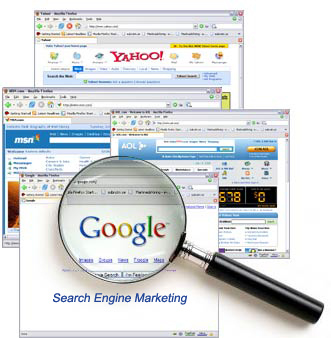 It’s probably not such a surprising outcome – Google has just won an appeal in Australia’s highest court overturning a Federal Court decision that it had engaged in misleading or deceptive conduct in relation to its AdWords product (see a PDF of the High Court’s press release). The original action had been brought by the Federal Government’s Australian Competition and Consumer Commission on behalf of companies using competitor’s trademarks and brand names in Google AdWords so that their pages appeared in the ‘Sponsored Links’ section at the top of Google’s search results.
While the individual action of companies to use their competitors’ registered trademarks in such a way is clearly a breach of the trademark holder’s intellectual property rights, the High Court found – unanimously – that Google itself was not in breach.
As someone on the receiving end of trademark breaches like this – when I was part of an in-house marketing team, every other week we were firing off legal letters and emails to both Google and the company misusing our trademark – it was incredibly frustrating to be bringing up the same complaint with Google asking them to remove the offending AdWord, knowing that Google was pocketing revenue every time that trademark was appearing in searches.
Now, with this result, there is even less of a reason for Google to act promptly when it receives a complaint about AdWords from the legitimate trademark holder. Of course, trademark holders still have recourse to contact the offending advertiser directly, or to take legal action against them, but it’s potentially a very time-consuming and laborious process.
In the short-term, the best advice is vigilance. You should be checking your trademarks weekly in Google searches, and firing off emails and legal letters when you see it in use by one of your competitors. To make things easier, ask your legal team or your legal adviser to draft up a template for you – that way you can just drop in the new company name and contact details each time you need to send.
In the long-term (and I’ve thought about this a lot in the past) how do we get better protection for our brands and trademarks online? Companies like Google have no incentive to act. The more people using AdWords or other similar products, the more money they make. The only way we can make it work is to use technology smartly. It should be possible to integrate the databases of government intellectual property agencies around the world with the main search engine providers, and develop a program that checks submitted words and phrases used by advertisers against the database. If the trademark holder’s details in the specific country or countries don’t match with the advertiser’s details, put the onus on the advertiser to prove otherwise.
Chance of that happening in real-life? Doubtful.
For more news and analysis on the decision, see:
- Australian Financial Review – http://afr.com/p/technology/google_triumphant_in_high_court_poOxaajC2unjFcCnr7WV8M
- Business Spectator – http://www.businessspectator.com.au/bs.nsf/Article/High-Court-to-rule-in-longstanding-Google-ACCC-cas-pd20130205-4MHQ6?OpenDocument&src=hp12
- Computerworld – http://www.computerworld.com.au/article/452911/google_cleared_by_high_court_deceptive_adwords_case_/
(Pictured above: “Search-Engine-Marketing”, By Danard Vincente, available under a Creative Commons Attribution 2.0 Generic (CC BY 2.0) licence.)
Adequate Disclosure and Blogging
 Late last year, I received an email from a company wanting to “host an advertisement” on my site. I thought it was spam, so I deleted it. However, a couple of weeks later, the same person sent me a follow up email, including this offer:
“I believe we offer a very attractive system of advertising. You would be paid a yearly-renewable fee for placing a text-based advertisement that is appropriate to the topic of your site.”
Given the context and prior correspondence, this offer appeared to be genuine – so I looked into the media planning and online branding company behind the email. According to its website, the company uses “the latest technology and greatest minds in the industry, to meticulously source, plan and execute a cross-platform holistic campaign.” The company “forms partnerships with smaller niche sites.”
I was curious to find out more, so I replied. Here’s the offer the company made:
“After reviewing your website, we think that a new blog post would be the best and least intrusive option for you. We have two ways of doing this:
A) You are free to come up with the content of the article or blog post, but we do ask that it is in some way relevant to our client and is composed of roughly 300 words.
B) I can ask our copywriters to craft an article to fit your site.”
I was also given an example of how it works – a Citroën C4 review on http://www.mycarreviews.co.uk :
“The advert can be found within the third paragraph – ‘J.D. Power’.”
For my part in the scheme, working with a telecommunications, beauty, health, tourism or finance client would ensure me US$140USD per year, while working with an online gaming client (poker, casino, bingo, etc.) would get me US$150USD per year.
Looking at the UK-based My Car Reviews site, there is no form of disclosure I can see with regards to commercial interests or agreements.
The insidious nature of this form of advertising and branding completely undermines the whole concept of blogging and independent content and opinion.
Australian Government broadcaster ABC’s Media Watch program covered the issue of disclosure in blogs in October 2012:
“The fact is, whether Australian bloggers disclose their commercial agreements to their readers is entirely a matter for them. In the United States, it’s the business of the Federal Trade Commission which states firmly that :
…bloggers who make an endorsement must disclose the material connections they share with the seller of the product or service.
— Federal Trade Commission, Guides Concerning the Use of Endorsements and Testimonials in Advertising, 2009”
Similarly, in the UK, the Office of Fair Trading has taken action against inadequate disclosure for example, with Handpicked Media, an operator of a commercial blogging network (OFT secures promotional blogging disclosures).
However, with the sheer number of blogs and the unregulated nature of the medium, how can any regulatory authority successfully enforce guidelines or legislation in this area?
For any readers of my site, please note that I will not be publishing any paid content or promoting companies or brands for money, and where any content relates to Explore Communications’ commercial interests or clients, I will disclose the relationship!
The Times of London Offers Subsidised Tablet
 OK, it’s not quite the newspaper launching its own fully-branded device (a prediction I made back in August 2011), but the news that The Times of London is offering a heavily-subsidised a 32GB Asus Nexus 7 as part of its subscription package is a giant step in that direction. (see Times of London offers $80 Nexus 7 to new digital subscribers)
At US$80, it represents a discount of 75% on the tablet’s street price – and, all of a sudden, you can imagine media executives around the world thinking, “if the Times can discount that heavily, how can we give the device away for free?”.
Phone companies ‘give away’ the device all the time – it’s just coming up with the subscription pricing model that works – by either locking subscribers in to a long-term contract, or bundling a number of different publications together.
Also, if the tablet is becoming increasingly commoditised (the Aakash, for example), one of the considerations in the decision as to which device to “buy” will be the content available or accessible on that device.
“The world will soon be full of cheap tablets. Possibly free tablets.”
 Last year, I blogged about the tablet eventually becoming just a vehicle for delivering content and having little or no intrinsic value itself. With the release of the India’s $20 Aakash 2 tablet, it’s suddenly a reality. Despite some misgivings about the device (for example, in today’s AFR), the idea is real that you can give the device away because you can make all your money on content. Here’s what I wrote back in August last year:
As the price of the tablet comes down, in a couple of years, I can see the content owners themselves releasing their own tablets. Imagine a Gourmet Traveller or Vanity Fair-branded device, that gave you access to the entire back catalogue of magazine issues, plus an ongoing, paid subscription to future editions, together with some basic web and communication capabilities. On your bookshelf, instead of a stack of magazines and newspapers, you just have a short row of tablets, their titles visible on the spine, resting on a charging pad.
Bill Bennett had much the same view in a post yesterday: The world will soon be full of cheap tablets. Possibly free tablets.
I wonder which content providers will recognise the potential, and give it a try?
PR Agencies’ “Imperfect Pitch”
 Yesterday, the Australian Financial Review‘s Katarina Kroslakova published an article all about the ‘PR follow-up’:
“It’s mind-boggling how little the PR industry knows about the people they are pitching to.”
While Katarina is the editor of Life & Leisure weekly and Luxury magazine for the paper (so perhaps more prone to frivolous PR content than most journalists) I’ve heard the same frustrations regularly over the past 15 years from journalists in the business and technology field.
So, why can’t PR agencies get it right? For a start, the follow-up is seen as a necessary evil, for these reasons:
- Email is a poor communication channel. You can’t rely on sending through a press release via email or through a distribution service, and expect that it will be noticed, let alone read, by the targeted publications or journalists, because: a) they are sent so much poorly-targeted, inappropirate rubbish on a daily basis that you can understand why they didn’t think that your press release would be relevant or newsworthy; b) email is an imperfect communication channel and email headers can disappear from the viewing pane in the blink of an eye as more emails pile in; or c) some journalists have poor email management skills.
- Client pressure. Clients put a lot of pressure on PR agencies to do their utmost to generate coverage, despite an announcement’s low news value – so the agency feels compelled to show that they have followed up with all key publications and journalists. Agencies need to be a lot braver in advising their clients, because futile follow-ups only cause reputational damage to that agency and its client in the eyes of the media.
- Perceived newsworthiness of content. Worse than feeling compelled by the client to follow-up, some PR agencies feel that they have the right to dictate what they believe is newsworthy, rather than allowing the journalist or publication to make that judgment call on their own.
- Opportunity for contact. The follow-up provides practitioners a good opportunity to engage one-on-one with journalists, in an environment where it is increasingly difficult to find opportunities to do so. There are fewer press conferences and events, and the pace of the news cycle today means that most journalists and PR practitioners have very little time free in the day just to have a chat, a coffee or a drink.
So, it looks like we are stuck with the PR follow-up. How can agencies improve the experience for journalists?
- Don’t put your most junior people on follow-up duty. I know the temptation is there to do it – a) they are a cheaper resource for what is a time-consuming task; b) nobody likes to do it, and it’s the most junior team members who aren’t in a position to say no; and c) it’s seen as a low-skill task. However, while they might be enthusiastic, junior team members are the least likely to have a deep understanding of the publications they are calling or the client they are representing, and they are also unlikely to know much about the journalists they are speaking to, apart from a couple of paragraphs in a briefing document.
- Improve the quality of your written material. Get straight to the point in your cover note, and make sure that you take the time up front to tailor the message, specific to each journalist. Use that tailored message as the starting point if you do get on the phone to follow-up.
- Be more targeted. Be very clear about your objectives before distributing a press release. You should already be clear on which publications are most likely to run with the story, and only focus on these publications for follow-up.
- Let it go. If you have set realistic expectations with the client before the campaign kicks off, and you are achieving to these goals, just let it go. There are countless times when publications that I would have expected to run a story in a heartbeat never do – but i try not to lose any sleep over it. There are any number of reasons why the story didn’t get a run – but at the end of the day, it’s the journalist and the publication who ultimately decides what’s worth writing about – so just try again next time.
Fake Review Industry Hits Mainstream Media

Origami Crane – Andreas Bauer (Origami-Kunst)
It looks like a question I put out there in a post back in February this year is finally about to be answered.
So freelancer.com is “trousering a hefty 20 per cent, in commissions and fees” from paid-for activities like spam blog comments, article spinning and fake product reviews … I just wonder when people might start to question the website’s role in facilitating these types of questionable activity.
An article published on Fairfax news sites today, and also in the print edition of its metropolitan newspapers, has highlighted the problem that “online reviews have become an industry, with fake appraisals openly bought on sites like Fiverr and Freelancer”.
The mainstream broadcast media has picked up the story too – I saw a promo today that fake reviews will feature on an upcoming episode of Channel 7’s Today Tonight program.
In 2011, I wrote two posts on my first-hand experience with freelancer.com, as a potential user of the site (see “Need some social networking …”) and then as a site owner having to deal with spam commentary (see Freelancer.com – a Marketplace for Spammers).
Finally, with a bit of media exposure and angry consumers, we might now see some action from authorities.
(Pictured: “Origami-crane”, Andreas Bauer Origami-Kunst, available under a Creative Commons Attribution-Share Alike 2.5 Generic licence.)
Rediscovering Music … Again
 It’s nice to know that at the age of 42, I can still “rediscover” music all over again.
My first portable music device was the Sony WM-4, which I’m pretty sure was a Christmas present in 1983.
As a kid growing up without a TV, it was a revelation. All of a sudden, I could take one of the things that played a big part in my life – music – with me.
My third (or was it my fourth?) Walkman accompanied me on a gap year travelling as a 22-year-old, with a limited range of cassettes replenished mid-trip by friends back home.
And I guess it was the physical limitations of the format that eventually lost me.
I skipped the portable CD player and I knew that MiniDisc was a doomed format …
I was in portable music wilderness until I was given Apple’s Third Generation iPod in 2003. At the time, I was doing a two-hour each way commute to Sydney a couple of times a week with my iPod not only rediscovering my music collection, but also getting excited about new music again.
That iPod is now permanently docked to the home stereo, and I’ve moved through an iPod Touch to an iPhone and, although I’ve bought the odd piece of music and album via iTunes, I still like the idea of physically owning my music before converting it.
The iPod and iTunes has had a revolutionary effect on music, but it has opened the door to the next wave of competition.
Apple has potential become a victim of its own business model. The recent (and discredited) rumour that Bruce Willis was planning to sue Apple because he couldn’t leave his iTunes collection to his kids is the “Internet version” of the expression of our collective unconscious – that we no longer have the feeling that we own the music we buy.
Earlier this year, Spotify launched in Australia, and I didn’t wait until the Third Generation to get on board – I think I’d signed up within the week. Spotify has managed to do that thing that businesses and marketers dream of doing – “tap” into that collective unconscious – and take advantage of the realisation that has gradually been dawning in us older generations and is innately understood by my kids’ generation: if I can’t truly own the music we buy through iTunes, then why can’t I just borrow it and listen to whatever I want to, whenever.
This time around with Spotify, my rediscovery has taken me much deeper and into completely new directions. I’ve discovered Asie Payton and Jimmy Giuffre, and realised why, after possibly the most mesmerising performance I’ve ever seen (in the movie Diva), Wilhelmina Fernandez didn’t take the world by storm.
I still haven’t found the incredible live jazz duet I heard many years ago on the radio (possibly trumpet and saxophone), but I am heartened by my 15-year-old’s jazz funk-inspired playlist which runs for four days, which for him has opened a window to an incredible musical world.
(Pictured: “Music – an art for itself”, photo by photosteve101 see further http://www.planetofsuccess.com/blog/, available under Attribution 2.0 Generic (CC BY 2.0) licence.)
You Know Marketing Has Gone Too Far When …
… you have a headline like this:
Michael Phelps To Lose His Olympic Medals?
 OK, so it’s probably unlikely to happen, but surely something is fundamentally wrong when the world’s greatest Olympic athlete is in danger of losing his medals from the London 2012 Olympic Games for participating in a Louis Vuitton fashion shoot.
We’ve seen some ridiculous things going on at the Olympics this year in the name of marketing, advertising and sponsorship. Case in point: McDonald’s force Olympics bosses to ban all other restaurants from selling chips.
This latest news about Phelps comes about as a result of ‘Rule 40’:
‘Except as permitted by the IOC Executive Board, no competitor, coach, trainer or official who participates in the Olympic Games may allow his person, name, picture or sports performances to be used for advertising purposes during the Olympic Games.’
As the official London 2012 guidelines go on to explain, somewhat ironically:
‘The rationale for Rule 40 goes back to the amateur roots of the Olympic movement. The rule ensured that athletes maintained their amateur status.’
I’m a firm believer in marketing playing a vital role in accentuating, promoting or celebrating achievement – but marketing has gone too far when the perception is that it is more important than the core activity it is supporting.
Let’s hope that by the time the next Olympics come around in Rio in 2016, marketing is put back in its place and we just celebrate human sporting achievement, pure and simple.
(Pictured: “Michael Phelps wins 8th gold medal”, photo by bryangeek, available under Creative Commons Attribution-ShareAlike 2.0 Generic (CC BY-SA 2.0) licence.)
 This morning, I switched on the TV to catch the second half of the Australia vs Germany game in Women’s Hockey at London 2012. Instead, I found that Channel 9’s Olympic hosts were in the studio interviewing Grant Hackett on Australia’s swimming results. Switching over to Nine Network’s second Olympics channel (GEM), they were broadcasting the same content. So, I turned off the TV, turned on ABC Radio and listened to live commentary of the rest of the game.
I’ve blogged in the past about finding a better way to do sports broadcasting (funnily enough, also a hockey-watching experience), and what better place to start than the Olympics?
I wonder how different the Olympics coverage will be in four years’ time in Rio? Potentially, it could (and should) be radically improved – especially with the emergence of social media and smart phones and tablets, and the rise in use of on-demand and Internet-based forms of multimedia content delivery.
Given the incredible advances in the way we can deliver and consume content, why is the coverage of London 2012 so bad in Australia? Because the Nine Network and (and Foxtel) secured the exclusive broadcast rights for London 2012 way back in 2007 (yes, 2007!) and paid $120million for the privelege. There’s a nice explanation on ABC’s Behind the News on what it means to have to have exclusive rights to the Olympics – including restrictions on spectators sharing content on social media.
Back in July 2007, Facebook had 30 million users. It had 955 million monthly active users at the end of June 2012. On Twitter, users were tweeting a combined 5,000 times a day in 2007. Now Twitter has over 500 million users, and just one Olympian – British diver Tom Daley – is reportedly receiving 50,000 tweets a day. In Australia, ABC’s iView wasn’t launched until 2008 – and it wasn’t until a few years later that the other television networks started offering a similar service. Apple’s first iPhone was only released in June 2007, and the iPad was still nearly three years away.
Only as genius could have guessed at the impact that some of these technology advances (and more) would have in five years times on events like the Olympics. I’m pretty sure they didn’t have any geniuses negotiating the Olympic broadcast rights in 2007.
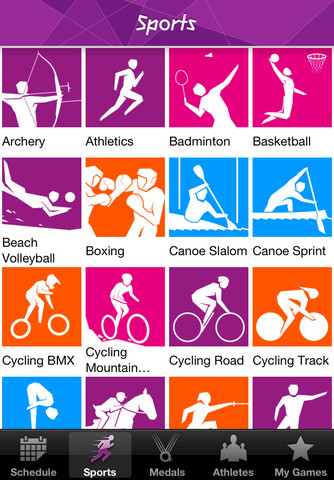
The official London 2012 iPhone app gives us a glimpse at what this future might look like for Rio 2016. At my fingertips, I’ve got all the events, the schedules the athletes, up-to-date results, medal tallies and news. (Unfortunately, the “Reminders” for events don’t seem to work very well, but it’s the thought that counts.)
If we can add live and on-demand audio and video content, we can pretty much do away with the whole “exclusive broadcast rights per country” concept that the IOC is clinging onto, and adopt a low-cost, per-user model that seems to have worked so spectacularly well for Apple’s iTunes and AppStore. And I don’t have to deal with the frustration of jingoistic commentary, Australian medal ceremonies and races replayed for the hundredth time, the arbitrary flicking from one sport to the next and the constant ad breaks. I’m happy to have geo-targeted coverage, and also happy to have a free service supported by advertising – but I’d also be willing to pay for an ad-free premium service that gives me the ability to watch live coverage and also on-demand footage – and I bet I’m not the only one.
Putting All Your Eggs in One Basket
 It’s not a great idea to develop apps on just the one operating system platform (OS) – even when that platform is the most dominant one in the market.
So, why isn’t it a good idea to develop an app for just one OS?
For a start, you are giving the company behind the platform free marketing and publicity every time you spruik your own app – which you might not care about, but I’m pretty sure that that OS company’s competitors grind their teeth everytime they see a nice big ad featuring the product and/or logo of their dominant rival.
The main reason, however, is that it is a big risk to be completely reliant on one platform, and three news stories today perfectly illustrate why it is such a bad idea.
In the first story, TechCrunch reports on Apple’s slow response to a bug causing apps to crash after updating:
Just a quick update on the issues plaguing Apple’s iOS and Mac App Stores: Apple has now informed developers that it’s aware of the problem and is working on a resolution. For background, a serious problem has been discovered in the iOS and Mac App Stores which has been causing apps to immediately crash after users update to the most recent version. This is now day three of the problem, and Apple had yet to respond to the situation until this afternoon.
In the second story, iTNews reports on one of the apps to fall victim to the bug – Commonwealth Bank’s Kaching. The problem is that we are not talking about Angry Birds here – we are talking about real business apps that result in significant revenue impact for the company affected, and significant reputational damage when the apps stops working.
In the final story, engadget covers how an iOS trojan managed to infiltrate Apple’s App Store:
A Russian scam app known as Find and Call managed to hit the App Store and create havoc for those who dared a download, making it the first non-experimental malware to hit iOS without first needing a jailbreak.
It’s that old adage about ‘never putting all your eggs in one basket’ – despite how sturdy, pretty to look at or cool that basket might be! It only takes one mistake in the coding, one security slip-up, or one bright shiny new basket that everyone suddenly wants – and there go your eggs.
Ironically, Commonwealth Bank’s announcement that it has released Kaching for Android couldn’t have come at a better time.
(Pictured: “Eastern eggs in Bucarest”, photo by Julie70, available under Creative Commons Attribution-NonCommercial-ShareAlike 2.0 Generic (CC BY-NC-SA 2.0) licence.)
 explorecomms.com.au
